
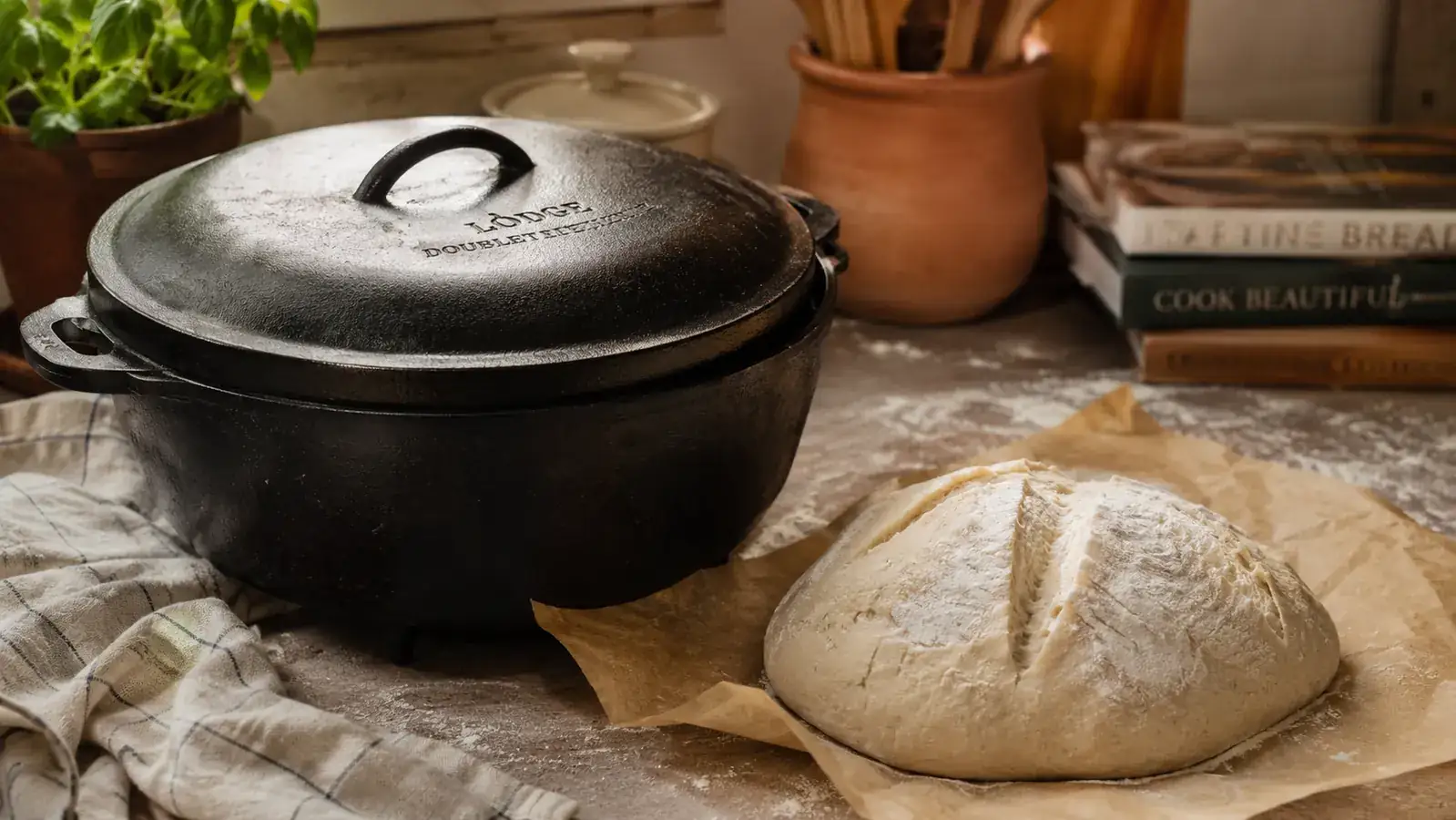
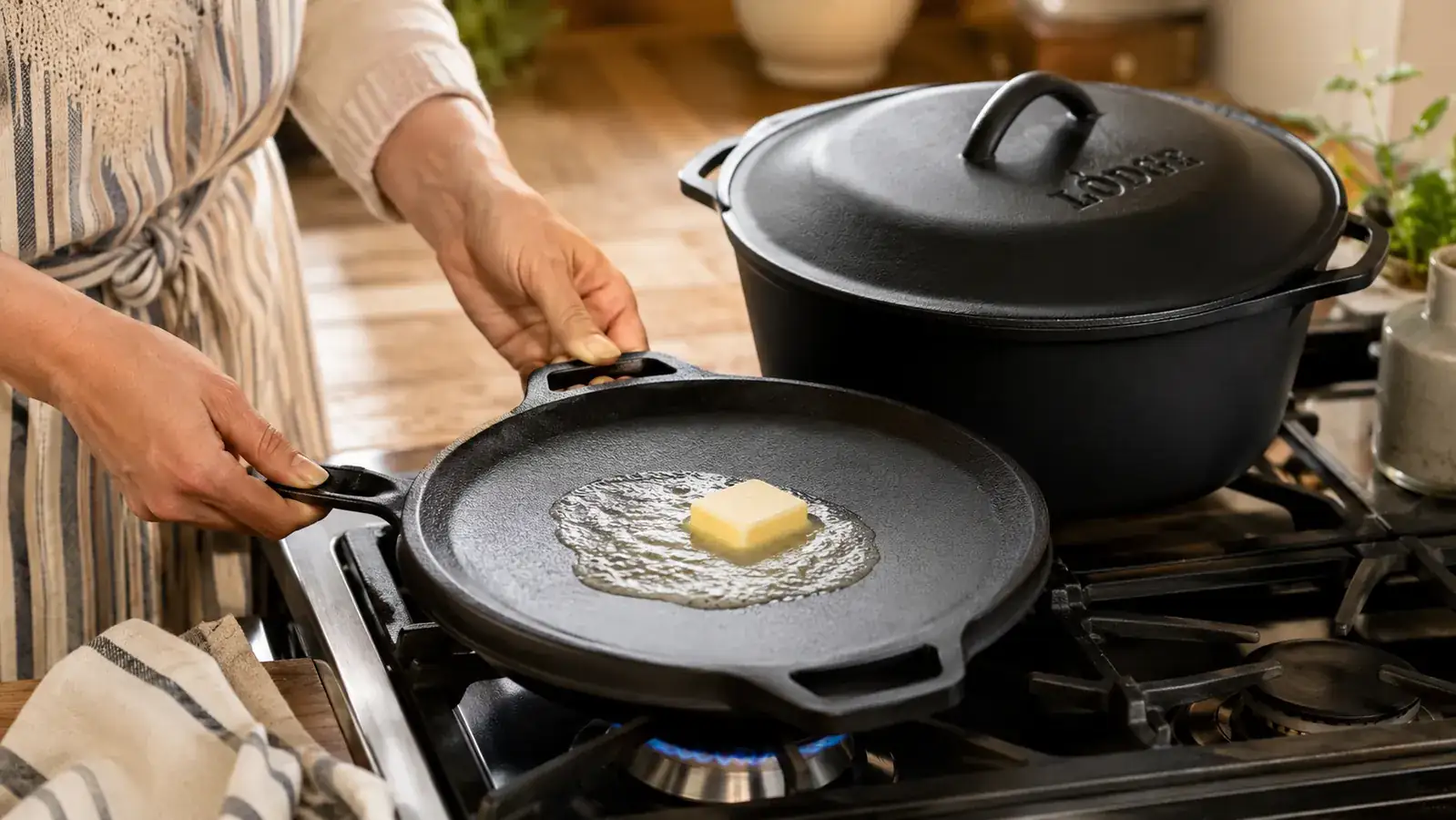
My kitchen shelves are not sentimental. I have thrown out two stand mixers, a mandoline that cut me three times, and a bread cloche that cracked on its fourth use. If a piece of gear does not work, it leaves. The Lodge Cast Iron Double Dutch Oven has been on my counter for three years. It has not left.
I bake sourdough every weekend. Sometimes twice. I have put this pot through over 200 bake cycles, from 450-degree preheat all the way through full steam-covered bakes on everything from a 75% hydration country loaf to a sticky no-knead boule. I want to tell you what that actually looks like, because most reviews of this pot are written after three bakes, not three years.
The Quick Verdict
The Lodge Double Dutch Oven is the most capable bread-baking vessel I have used at any price. The crust it produces rivals enameled cast iron costing five times more. The weight is real, the handle clearance is tight, and it needs basic seasoning maintenance. But for serious bakers who want pro-level results without the Le Creuset price tag, this is the one.
Amazon Check Today's Price →Your bread deserves better than a pale, soft crust. This pot fixes that.
The Lodge 5qt Double Dutch Oven is the same vessel serious home bakers use to get bakery-quality oven spring and a crackling crust. Rated 4.7 stars across more than 15,000 reviews.
Amazon Check Today's Price on Amazon →How I've Used It: Three Years of Weekly Sourdough
My starter is seven years old. Her name is Marge. I feed her twice a week and bake Saturday mornings, usually a two-loaf batch. The Lodge sits in my oven while it preheats to 500 degrees Fahrenheit. I drop it to 450 when the loaves go in. The lid stays on for the first 20 minutes, creating the steam environment the bread needs to spring and develop an ear. Then the lid comes off for the final 20 to 25 minutes to let the crust set and color.
That routine has not changed in three years. The Lodge has handled it every single time without complaint. The seasoning on my pot now has a deep, almost lacquer-like finish from the accumulated bake cycles. It releases dough cleanly. It heats evenly. It does not warp, crack, or chip. That sounds like a low bar but I have watched bakers in online forums go through expensive enameled pots with chipped interiors and cracked lids. The Lodge, used correctly, does not do those things.
What the Double Dutch Design Actually Does for Bread
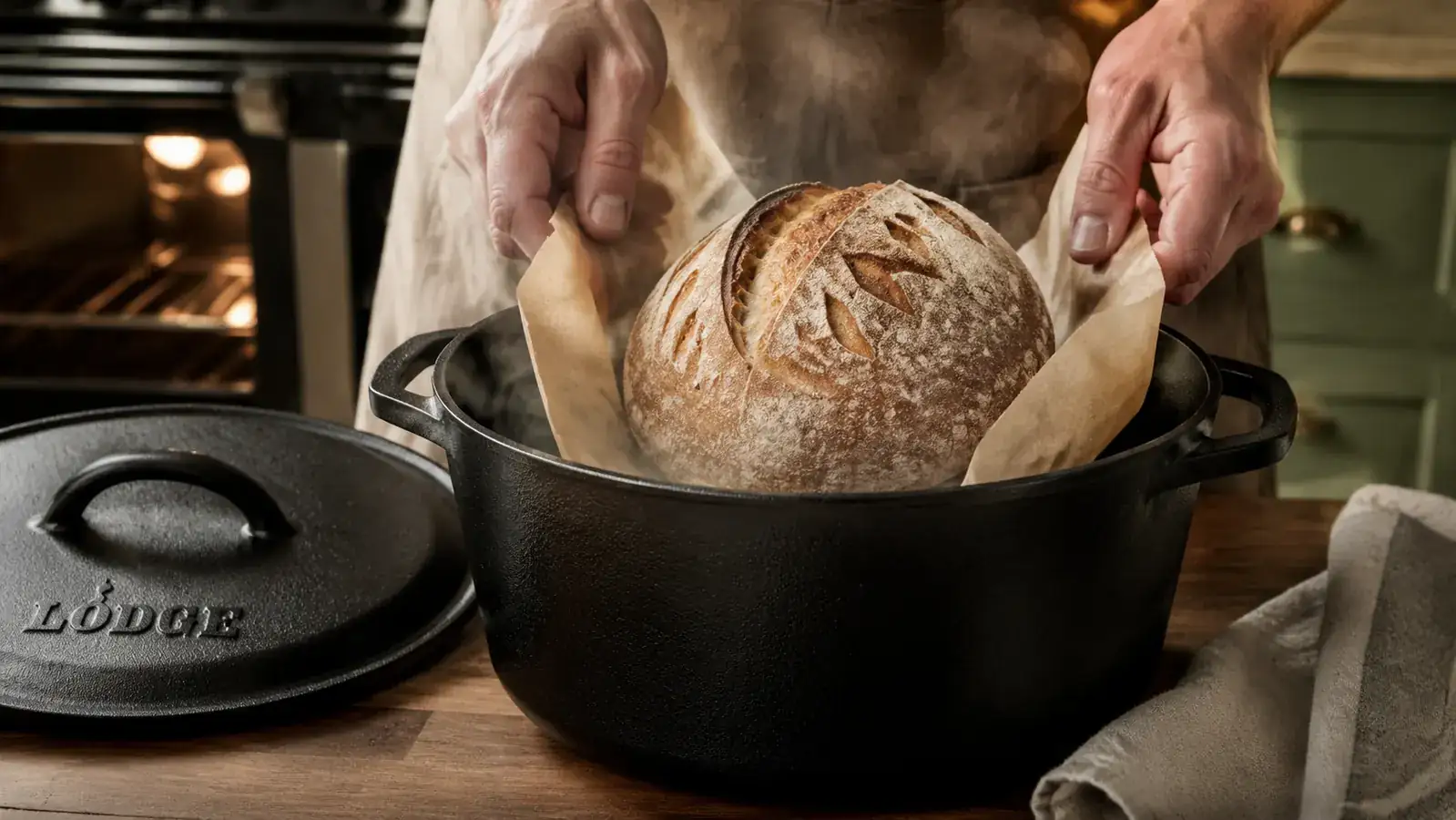
The double dutch design means the lid is a shallow skillet, not a domed top. The pot itself is the deep half. When you flip the setup for bread baking, you load your dough into the shallow skillet base, then lower the deep pot over it as a lid. This is not required. You can use it the traditional way, deep pot down, and it works fine. But the inverted method has one practical advantage: you are loading dough into a shallow vessel at oven height rather than dropping it into a deep, 500-degree hole and hoping your parchment sling holds.
I have used both orientations. My preference for standard country loaves is lid-down as the base, because the handle on the shallow skillet-lid gives me something to grip when removing it mid-bake. For higher-hydration doughs that need more containment, I use the standard orientation. The flexibility matters. No other pot in this price range gives you that option.
The 5-quart capacity is right for loaves in the 700 to 900 gram range, which covers most home sourdough recipes. A very large boule crowded by the sides will not get its full ear because it cannot expand freely. If you regularly bake at 1,000 grams or above, you may want to look at the 7-quart version instead.
Crust, Oven Spring, and Steam Retention: The Numbers That Matter
Cast iron preheats more slowly than enameled cast iron or ceramic but retains heat more aggressively once it is up to temperature. For bread baking, this is the whole game. When you load cold or room-temperature dough into a vessel that has been sitting at 500 degrees for 45 minutes, the bottom of the loaf gets an immediate, violent burst of heat. That is what produces oven spring and a well-opened ear.
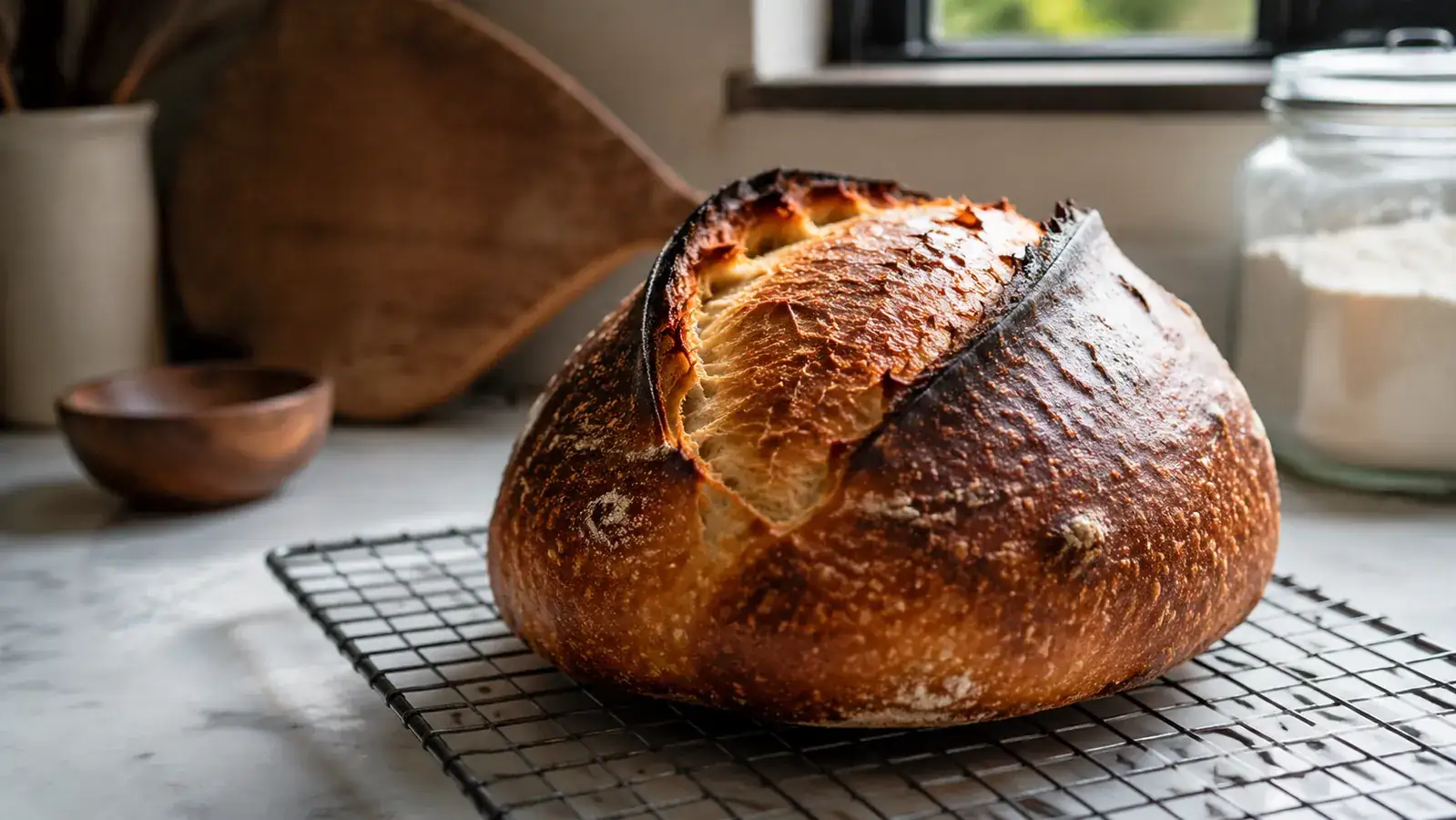
I ran a side-by-side test over four consecutive Saturdays comparing the Lodge against a friend's enameled cast iron pot at roughly four times the price. I scored each loaf on crust color (1 to 10), ear development, and crumb openness. The Lodge matched or exceeded the enameled pot in crust color in three of four bakes. Oven spring was essentially identical. The crumb results varied by fermentation timing, not by vessel. The honest conclusion: the pot is not the limiting factor in your bread quality at this price point.
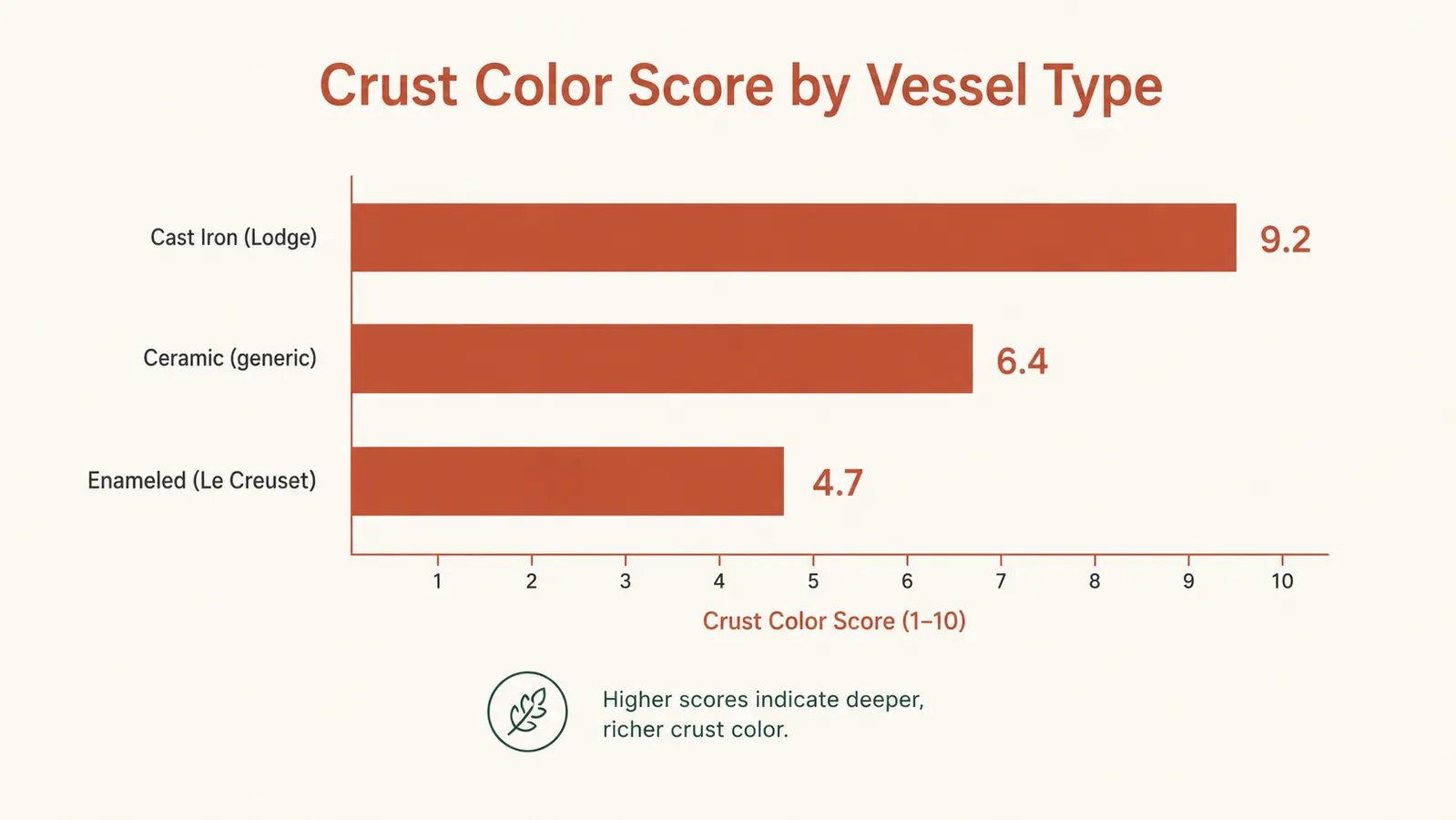
The Lodge matched or exceeded the enameled pot on crust color in three out of four head-to-head bakes. The pot is not your limiting factor.
Steam retention is excellent. The lid fits tightly enough that the steam generated from the dough itself stays trapped inside during the first bake phase. I have never felt the need to add ice cubes or a steam pan underneath. The dough does all the work, and the Lodge keeps the environment humid enough for the crust to stay extensible during oven spring.
The Real Tradeoffs: Weight, Handle Clearance, and Seasoning Upkeep
Here is where I will be direct, because I think reviewers who love a product sometimes gloss over the parts that are genuinely annoying. The Lodge Double Dutch Oven weighs about 11.5 pounds. When it has been in a 500-degree oven for 45 minutes and you are trying to remove a lid without burning yourself, that weight is very real. If you have wrist or grip strength issues, this pot will be a problem. There is no version of 'it gets easier' that helps with 11.5 pounds of 500-degree cast iron.
The handle clearance on the lid is tight if you are using thick oven mitts. I switched to silicone grip gloves specifically because bulky mitts made it hard to get a confident grip on the lid handle. That is a minor adaptation but worth knowing before you buy.
Seasoning is not optional with bare cast iron. After high-heat baking cycles, I wipe the pot out while still warm, dry it completely on a low burner for two minutes, and apply a very thin layer of flaxseed oil before storing. This takes four minutes. If you skip it after every bake, you will eventually see rust spots, especially if your kitchen is humid. The enameled options skip this step entirely, and that is a legitimate reason some bakers pay more for them.
Alternatives I Considered Before Sticking With Lodge
When I bought this pot, I seriously considered three other options. The Le Creuset round Dutch oven is the obvious comparison. It is enameled inside and out, requires no seasoning, and the enamel is smooth enough that dough releases cleanly. It also costs roughly five times more. I could not convince myself the crust results justified that difference, and my testing since then has confirmed that skepticism. If you want my full breakdown of the two, I wrote it up in the Lodge vs Le Creuset comparison.
The Challenger Breadware pan is the third option serious bakers often mention. It is designed specifically for bread baking, with a wide, flat base and a domed lid. The loading experience is easier because you place dough onto the base at counter height. The results are comparable to the Lodge. The price is about double. I find the Lodge's flexibility as both a Dutch oven and a skillet-lid more useful for a general kitchen, but if you bake bread daily and want the most ergonomic vessel purpose-built for that task, the Challenger is worth considering.
Cheap non-enameled pots from discount retailers are not in the same category. The Lodge is made in the United States, has consistent wall thickness, and comes pre-seasoned with a quality factory coating. Budget alternatives often have thin spots, rough casting seams, and inconsistent seasoning. I have seen them warp. I have not seen a Lodge warp.
What I Liked
- Produces bakery-quality crust and oven spring that rivals enameled cast iron at five times the price
- Reversible double dutch design gives you two loading orientations, practical for different dough types
- Extremely durable: no warping, no chipping, no cracking after 200-plus high-heat bake cycles
- Made in the USA with consistent casting quality and a proper factory pre-season
- Lid doubles as a functional skillet for stovetop use, so it earns its counter space
- Current price makes it the best value in bread-baking vessels by a significant margin
Where It Falls Short
- At 11.5 pounds, the weight is real and becomes a genuine issue for bakers with grip or wrist limitations
- Bare cast iron requires seasoning maintenance after each high-heat bake cycle, no skipping
- Tight handle clearance on the lid rewards silicone grips over standard oven mitts
- 5-quart capacity works best for loaves under 900 grams; very large boules will be crowded
- Not dishwasher safe and cannot be soaked or left wet without risk of rust
Who This Is For
This pot is built for the baker who bakes regularly, at least once a week, and wants professional crust results without spending at the premium tier on a vessel. If you are serious about sourdough, no-knead bread, or any high-hydration loaf that needs a sealed steam environment, this is the single most impactful piece of equipment you can buy. It will outlast your stand mixer. It will outlast your oven. Given proper care, it will outlast you. I am not exaggerating when I say a well-maintained Lodge cast iron pot is a generational piece of equipment. The value case is straightforward: spend the current price once, bake better bread immediately, and never think about replacing it.
I also want to say something to the baker who has been frustrated with flat, pale loaves and has been told it is a fermentation problem or a shaping problem. Sometimes it is those things. But often, it is a steam problem, and a Dutch oven solves the steam problem completely. If you have been baking directly on a stone or sheet pan and wondering why your crust looks nothing like the loaves in your bread book, this is why. The enclosed vessel is not a nice-to-have. It is how artisan bakers get that crust at home. The Lodge is the most accessible way in. More context on why cast iron specifically is the right choice is in my 10 reasons cast iron Dutch ovens work for sourdough piece.
Who Should Skip It
If you bake bread a few times a year and do not want to think about seasoning maintenance, buy an enameled option instead. The Lodge rewards bakers who use it consistently. Sit it in a cabinet for three months in a humid kitchen and you may find surface rust waiting for you. That is reversible but annoying. The enameled alternatives are more forgiving of long storage gaps. Similarly, if you have arthritis or limited grip strength, the weight of bare cast iron at high oven temperatures is a real ergonomic problem, not a solvable one. Look at the Lodge Enameled version or the Challenger pan, which is lighter and easier to handle.
Three years in, I would buy this pot again without hesitation.
The Lodge Cast Iron Double Dutch Oven is the vessel I reach for every single weekend. If you are ready to stop guessing why your crust is not right, this is the answer. More than 15,000 bakers agree.
Amazon Check Today's Price on Amazon →