
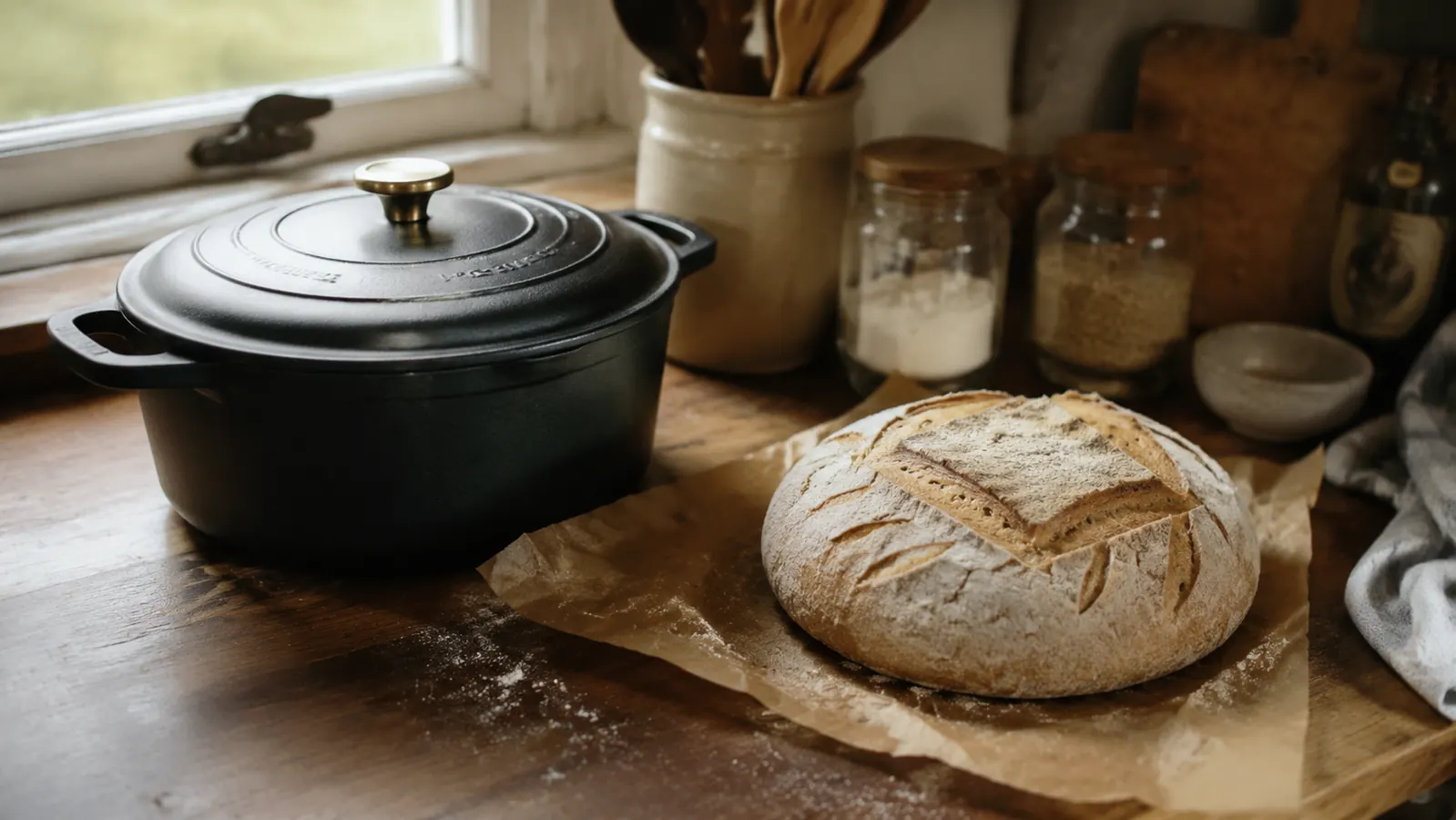
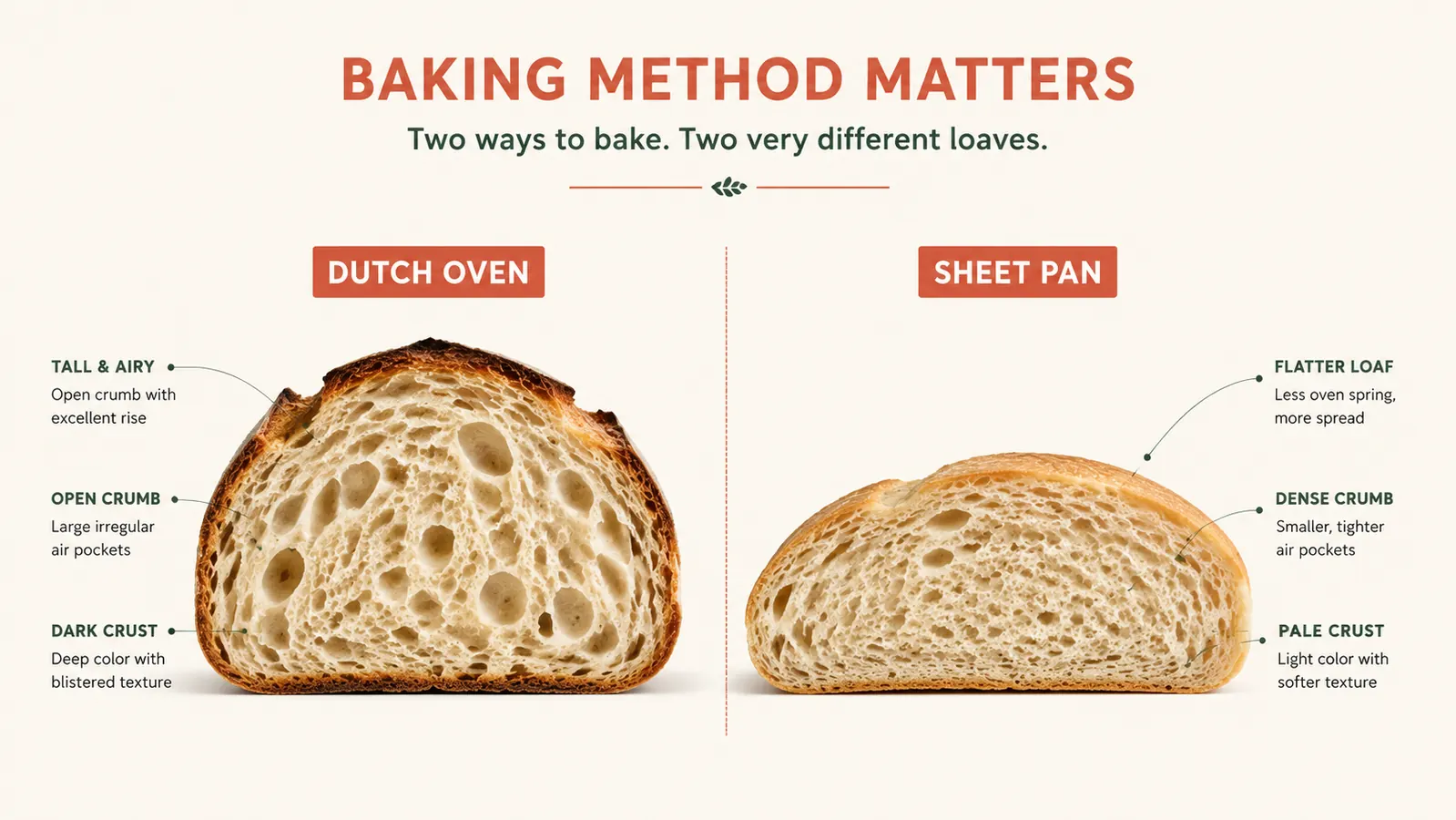
I spent two years blaming my sourdough failures on my starter, my shaping, my flour. The loaves came out flat. The crust was pale and crackery instead of dark and blistered. The crumb was gummy. I tried everything except changing what I was baking in. The day I moved to the Lodge Cast Iron Double Dutch Oven, the loaf I had been chasing for two years came out of my oven on the very first try.
I am not being dramatic. The Dutch oven is not a marginal improvement. It is the single variable that separates bakery-quality sourdough from home-oven sourdough. If you have been wondering why your crumb and crust never look like the photos in the bread books, read through these 10 reasons and see if you recognize yourself in them.
Still baking on a sheet pan? Here is why your oven spring never shows up.
The Lodge Cast Iron Double Dutch Oven is the baking vessel serious home bakers land on and never replace. 4.7 stars across 15,263 reviews. Pre-seasoned and ready to use.
Amazon Check Today's Price on Amazon →It Traps Steam Exactly When Your Loaf Needs It
The first 15 to 20 minutes of baking are when oven spring happens. The crust has to stay soft and extensible while the loaf expands. If the crust sets too early, the loaf cannot open. A closed cast iron pot traps every bit of steam that comes off the dough itself, creating a self-steaming environment that no residential oven can replicate. Commercial bakers inject steam into deck ovens. You get the same result by putting a lid on your Lodge.
The Crust You Have Been Chasing Is a Heat Retention Problem
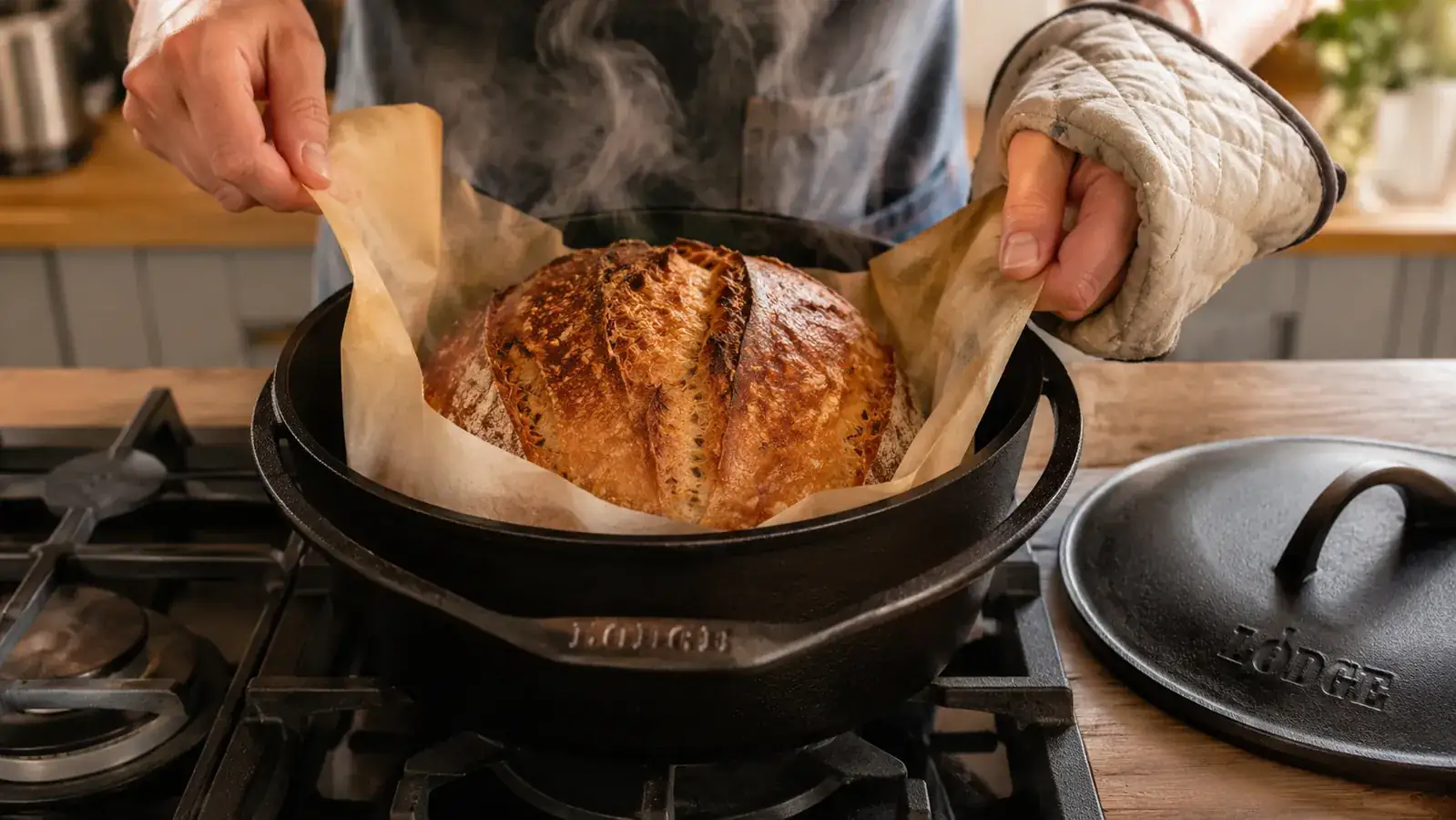
Cast iron holds heat at a level that ceramic and thin stainless cannot match. When you drop a cold dough ball into a 500-degree cast iron pot, the bottom and sides of the loaf hit intense, even, sustained heat immediately. That is how you get a blistered, crackling crust. Thin pans lose temperature the second cold dough touches them. Cast iron does not.
The Lid Doubles as a Skillet, So It Earns Its Counter Space
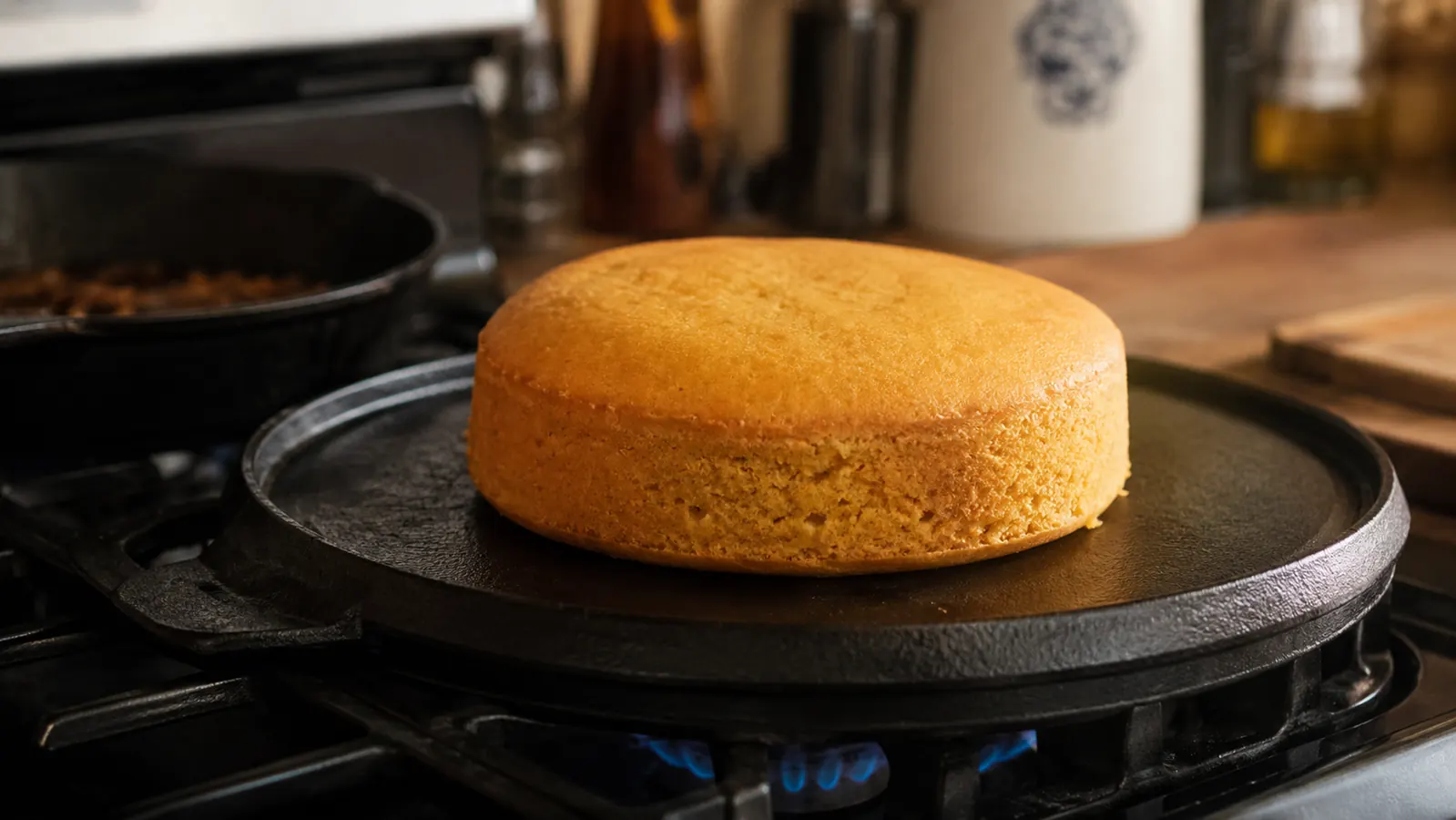
The Lodge Double Dutch Oven is sold as a 2-in-1: the pot and a lid that is shaped like a shallow skillet. I use that lid at least twice a week for cornbread, eggs, searing meat before a braise, and toasting spices. It is not a gimmick. It is a real 10-inch skillet with a helper handle, and it lives on my stovetop when it is not serving as a bread lid. That matters when you are deciding whether a piece of equipment earns permanent counter space.
Loading the Dough Is Safer and Easier Than You Think
I was scared the first time. Five hundred degrees, heavy cast iron, a wobbling boule, and oven mitts that feel half as thick as they should. Here is what nobody tells you: the Double Dutch Oven is designed to load from the top instead of lowering a lid-first onto a hot skillet. You flip it. The shallow lid becomes the base, you drop the dough onto it cold or on parchment, and you lower the deeper pot over it. No reaching into a screaming-hot vessel. Once I understood this, I never went back to the awkward pour-in method.
Five Quarts Is the Right Size for a Standard Sourdough Batard or Boule
Sizing matters more than most people realize. Too small and the loaf hits the sides before it opens. Too large and the steam dissipates before it does its job. The Lodge 5-quart hits the sweet spot for a 900-gram to 1,100-gram loaf, which covers most home sourdough recipes. You can also fit a small batard if you angle it slightly. I have baked over 200 loaves in mine and never wished for a different size.
I had been making great dough for two years. It turned out the dough was never the problem. The baking vessel was.
Pre-Seasoned Means You Bake on Day One
Lodge seasons their cast iron at the factory with vegetable oil in a high-temperature oven. When the pot arrives, it is genuinely ready to use. I have bought cast iron from other brands that required two to three seasoning passes before it stopped tasting metallic. The Lodge was ready for bread the first week I had it. After years of use and proper cleaning (dry heat, never soap), the seasoning has only improved.
The Ear You Score Into Your Dough Will Actually Open
The ear, that dramatic flap of crust that peels back along your score line, only happens when the crust is still soft during initial baking and the oven spring is strong enough to push it open. Both conditions require trapped steam and intense heat. On a sheet pan or in a regular pot without steam, scores heal over. In the Lodge, they open. Every baker I have talked to who switched to cast iron describes the same thing: the first loaf looked like it came from a professional bakery and they could not explain why their technique had suddenly improved. The technique had not improved. The equipment had.
It Is Indestructible in a Way That Baking Stones and Cloches Are Not
I cracked a baking stone by accident. I have heard of ceramic cloches breaking when they hit a cold surface or when someone drops a lid. Cast iron does not crack. It chips if you drop it on concrete and it can rust if you leave it wet, but neither of those things ends its life the way a cracked stone does. I expect to use this Lodge for the next 30 years. Lodge has been making cast iron in the same South Pittsburg, Tennessee foundry since 1896. The cookware is not going anywhere, and neither is their warranty.
The Price Is a Fraction of Le Creuset Without a Meaningful Baking Difference
I have baked in enameled Dutch ovens that cost four to five times as much. The bread was not meaningfully better. The difference between a bare cast iron Lodge and an enameled Le Creuset for bread baking comes down to enamel that makes cleaning slightly easier, and a lid knob that is rated for higher temperatures. If you are deciding between spending the difference on better flour, more bread books, or a prettier pot, buy the Lodge and spend the rest on flour. You can read more about that comparison in our Lodge vs Le Creuset head-to-head if you want the full breakdown.
15,263 Reviews at 4.7 Stars Is Not a Fluke
I am generally skeptical of Amazon review counts, but cast iron is not a category with a lot of manufacturing nuance to hide. Either it is heavy, it is seasoned correctly, and it bakes bread the way cast iron should, or it is not. The Lodge has 15,263 reviews at 4.7 stars because it does exactly what cast iron is supposed to do, at a price that is hard to argue with. If you want a deeper read on durability, lid fit, and the one thing most bakers find annoying about this specific model, I have written it up in the full Lodge Double Dutch Oven review.
What I Would Skip
A few things are not worth the money or the cabinet space. Baking stones chip and crack and never replicate the steam environment a Dutch oven creates. Covered ceramic bakers look beautiful but the budget-priced ones tend to crack at the temperatures sourdough requires. Steam injection kits for home ovens, the kind that use a pan of boiling water on the lower rack, produce inconsistent results and I have warped two oven racks trying. If you want the one piece of gear that actually changes your results, the Lodge Double Dutch Oven is it. Skip everything else until you have baked 20 loaves in cast iron and genuinely understand what you still need.
One piece of gear. Twenty loaves in. You will not need anything else.
The Lodge Cast Iron Double Dutch Oven is the honest answer to flat, pale, dense sourdough. Pre-seasoned, works from day one, and built to last longer than any other piece of equipment in your kitchen.
Amazon Check Today's Price on Amazon →