
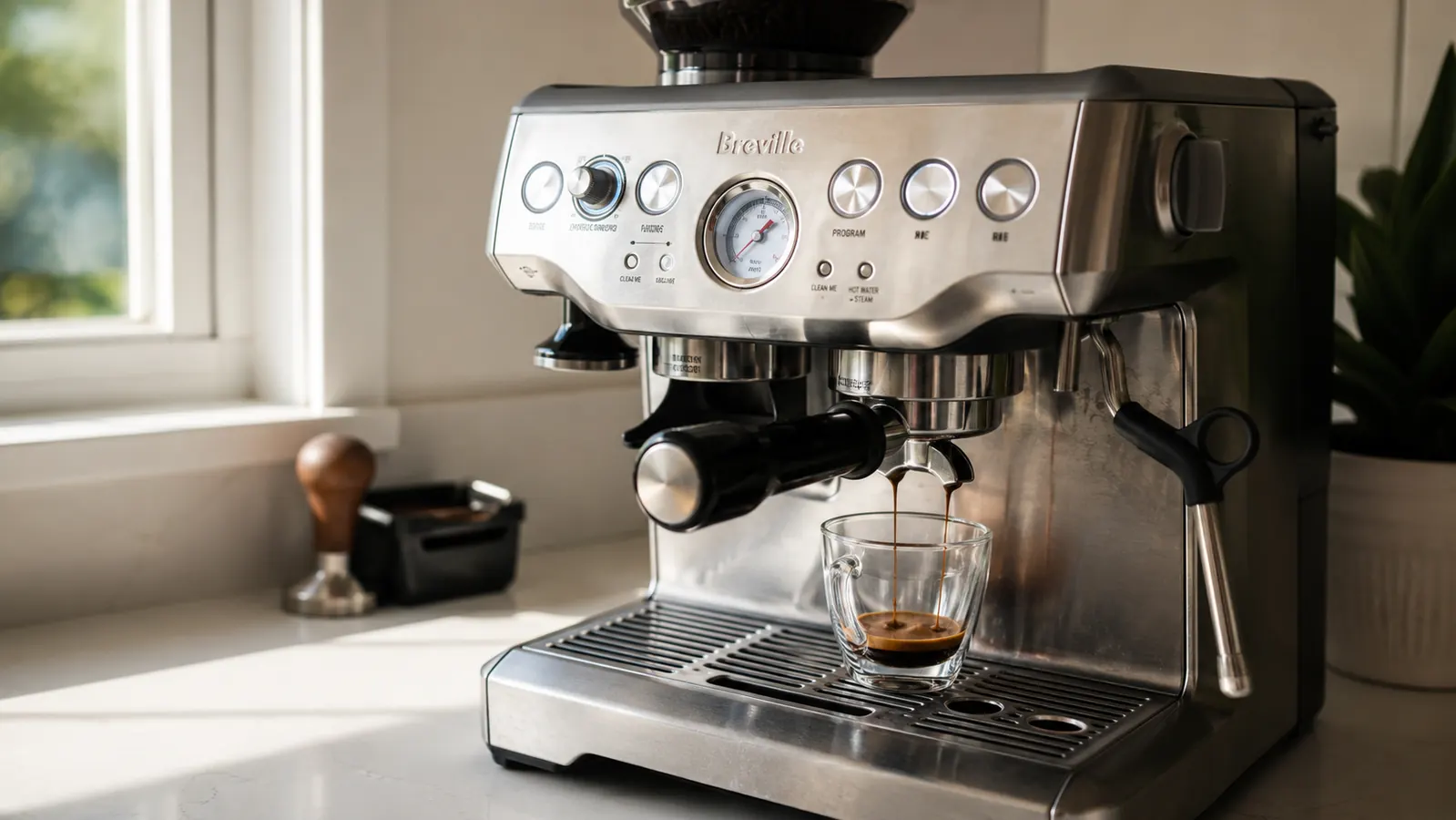
I want to tell you something the product listing will not. When I started seriously looking at home espresso machines, the Breville Barista Express BES870XL kept appearing at the top of every "best beginner espresso machine" list. Built-in grinder. One machine. One price. The narrative was too clean. And after spending real time with this machine, dialing through its grinder, cleaning the steam wand, and hitting the wall it eventually puts in front of serious coffee drinkers, I think you deserve a more complete picture before you spend close to five hundred dollars.
This is not a takedown. The Barista Express is genuinely good at what it promises for a specific type of buyer. But the glossy reviews bury the tradeoffs. The grinder has a ceiling that matters. The single boiler creates a rhythm that takes getting used to. The machine asks more of you than you expect on day one. If you go in knowing that, you will love it. If you go in expecting plug-and-play espresso, you will be frustrated.
The Quick Verdict
A genuinely capable all-in-one for dark-to-medium roast drinkers who are patient with a learning curve. The grinder ceiling and single-boiler wait are real constraints that push serious coffee enthusiasts toward separates within a year.
Amazon Check Today's Price →The Barista Express is the right machine for a specific buyer. Make sure you are that buyer before you check out.
It has 27,575 reviews, a 4.5-star average, and a loyal following. The caveats in this review are real but they are not dealbreakers for everyone. See the current price and decide with clear eyes.
Amazon Check Today's Price on Amazon →How I've Used It
I pulled my first shot on the Barista Express after about thirty minutes of reading the manual, rinsing the machine, and running the initial purge cycle Breville recommends. The setup is straightforward and the machine is genuinely well-built. The brushed stainless steel feels substantial. The grinder is quiet enough that I do not feel guilty using it before seven in the morning. The pressure gauge on the front is satisfying to watch. For the first week I was charmed.
I started on a medium roast from a local roaster, grind size around eight on the stepped dial, dose around eighteen grams. The shots were pulling long and thin. I dialed the grind finer over several days. By day four I had a shot I was happy with: a thirty-second pull, about two ounces, with a layer of crema that looked like the pictures. That learning curve is real and it is worth it. But what I noticed over the following weeks is that the machine started showing me its edges in places I had not anticipated.
The Grinder: Capable But Has a Hard Ceiling
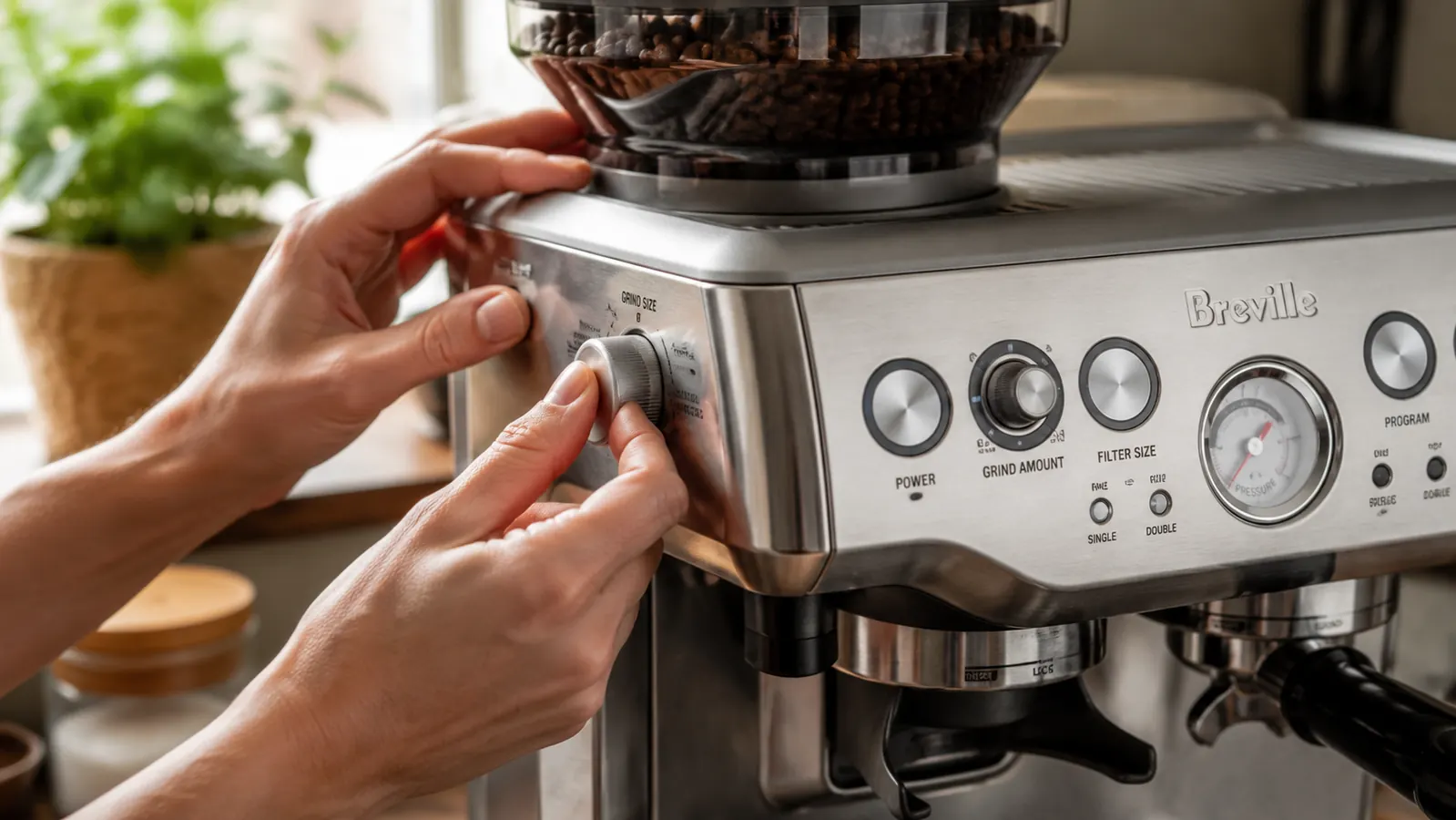
The built-in conical burr grinder is the whole selling proposition of this machine. One device, one grinder, no extra counter space. And for medium and dark roasts it works. I consistently got repeatable doses, the grind was even enough for good extraction, and dialing in was a matter of a few stepped adjustments. If you drink dark roast every morning and never deviate, you will likely never notice the limitation.
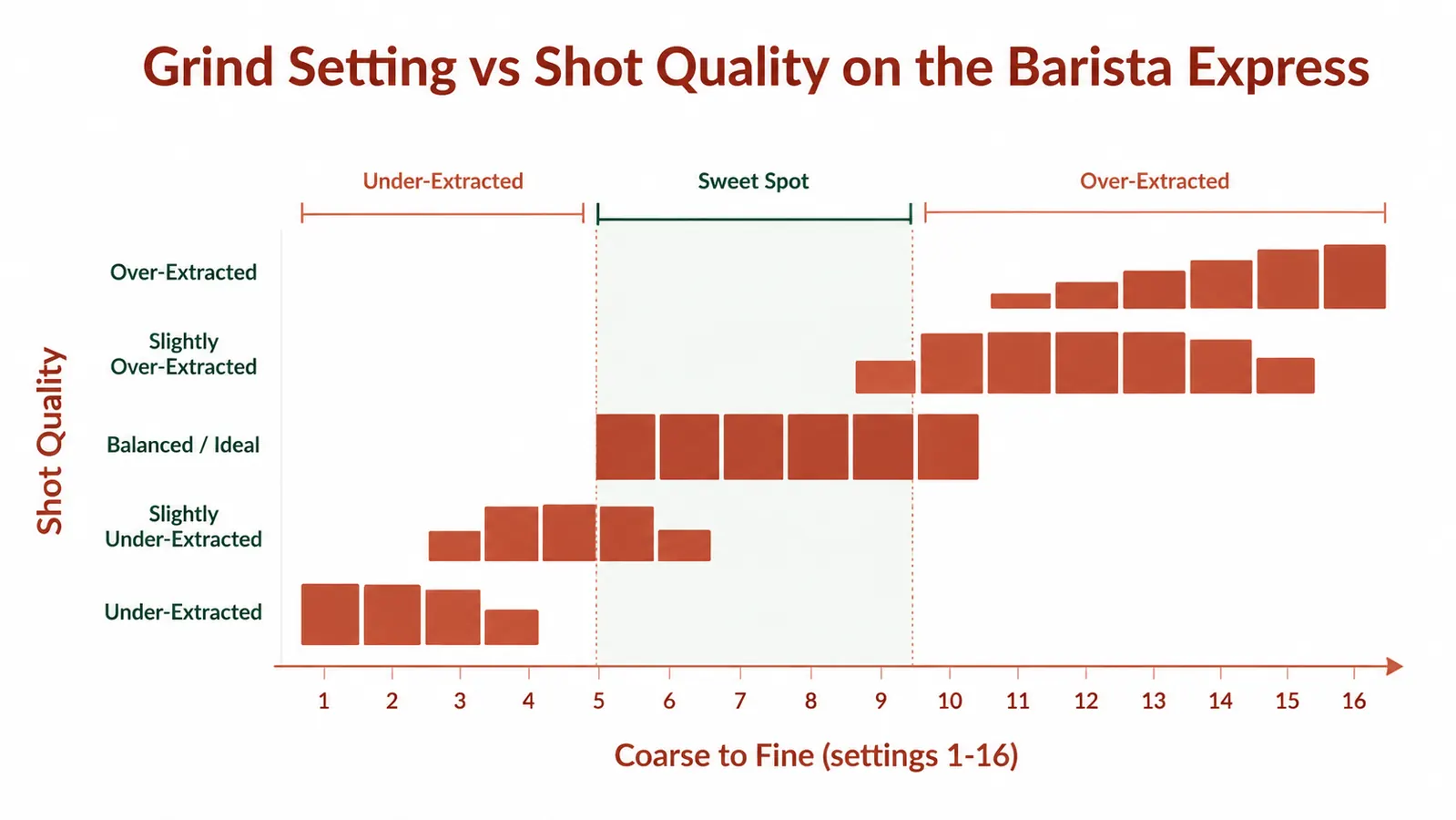
Here is what the marketing does not say clearly: the grinder struggles with light roasts. Light roast beans are harder and denser. They need a finer grind and more precision to extract properly. The stepped grinder on the Barista Express has sixteen settings, but the steps between fine settings are too coarse to find the sweet spot consistently with a light-roasted single-origin coffee. You will land between steps, where one setting is slightly under-extracted and the next is slightly over-extracted, with no adjustment in between. Third-wave coffee drinkers who rotate through roasters and origins will find this maddening within a month.
There is also the static issue. The grounds exit the chute with a charge of static electricity that scatters fine particles across the portafilter and the drip tray. This is more a cosmetic annoyance than a performance problem, but it becomes part of your daily routine to wipe down the area around the portafilter every single morning. Some people add a few drops of water to the beans before grinding, a technique called the Ross Droplet Technique, which helps noticeably. That it requires a workaround is worth naming.
The Single Boiler: The Tradeoff Nobody Explains
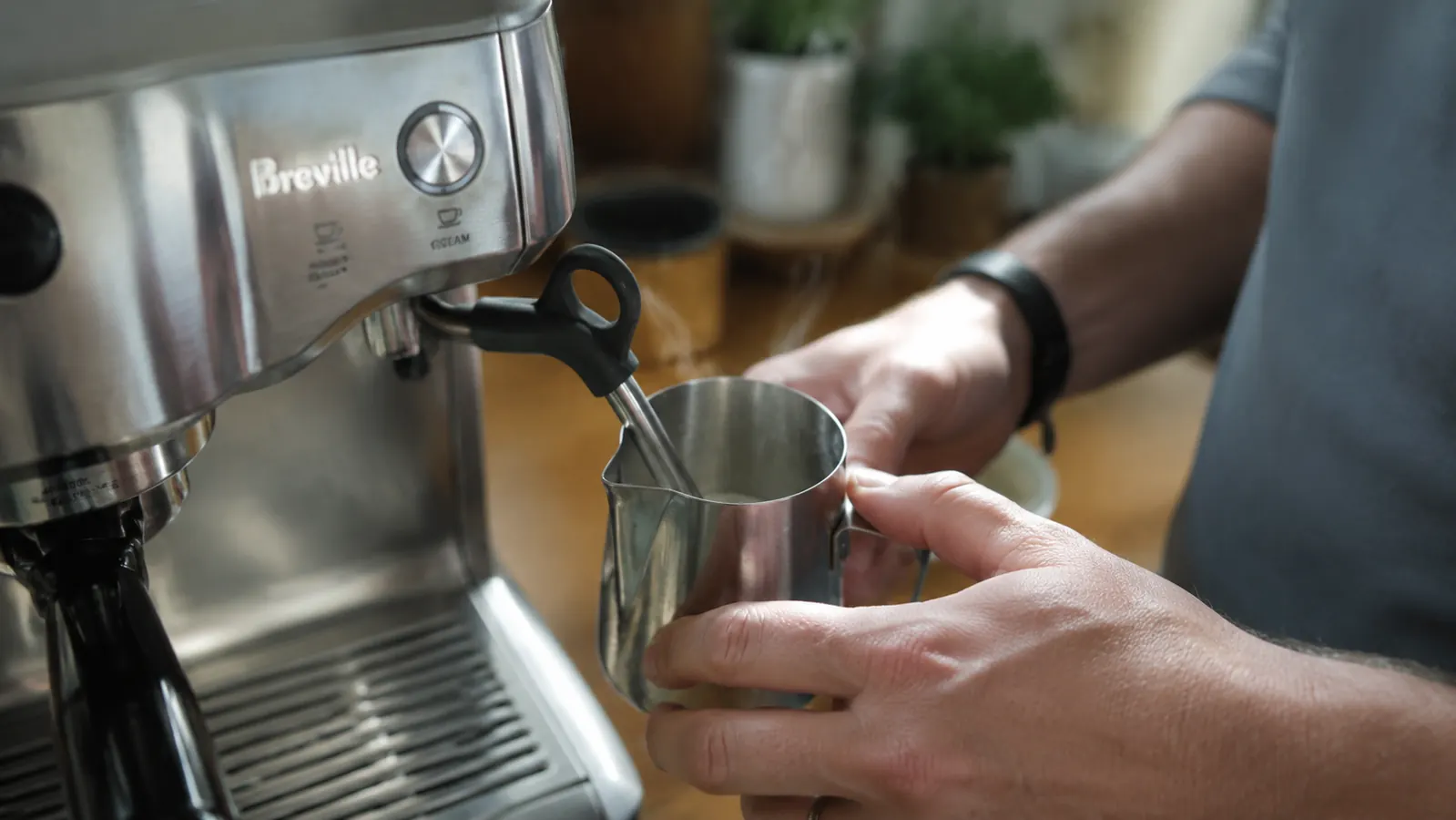
The Barista Express uses a single thermocoil boiler. That means you cannot pull a shot and steam milk at the same time. You pull your shot, then you wait for the machine to heat to steaming temperature, then you texture your milk. The transition takes about a minute, sometimes a little more. On a weekday morning when you are already running behind, that minute is noticeable.
It is not a fatal flaw. Plenty of great espresso machines use single boilers and home baristas learn to work with the sequence. But the dual-boiler and heat-exchanger machines at higher price points exist precisely to eliminate this pause. If you make milk drinks every morning and you care about speed, you will feel this limitation every single day. For straight espresso drinkers who never texture milk, it is completely irrelevant. Know your own routine before you decide.
Third-wave coffee drinkers who rotate through roasters will find the stepped grinder maddening within a month. For dark roast drinkers who never deviate, they may never notice it at all.
The Maintenance Reality
Every home espresso machine requires maintenance. The Barista Express requires more daily attention than I expected going in. Here is what the routine actually looks like: before each session you rinse the portafilter and warm it. After pulling a shot you knock out the puck, rinse the basket, wipe the shower screen. After steaming milk you purge and wipe the steam wand immediately, or the milk proteins bake onto the tip and harden within minutes. Every few weeks you run a cleaning tablet through the machine. Monthly you descale if your water is hard.
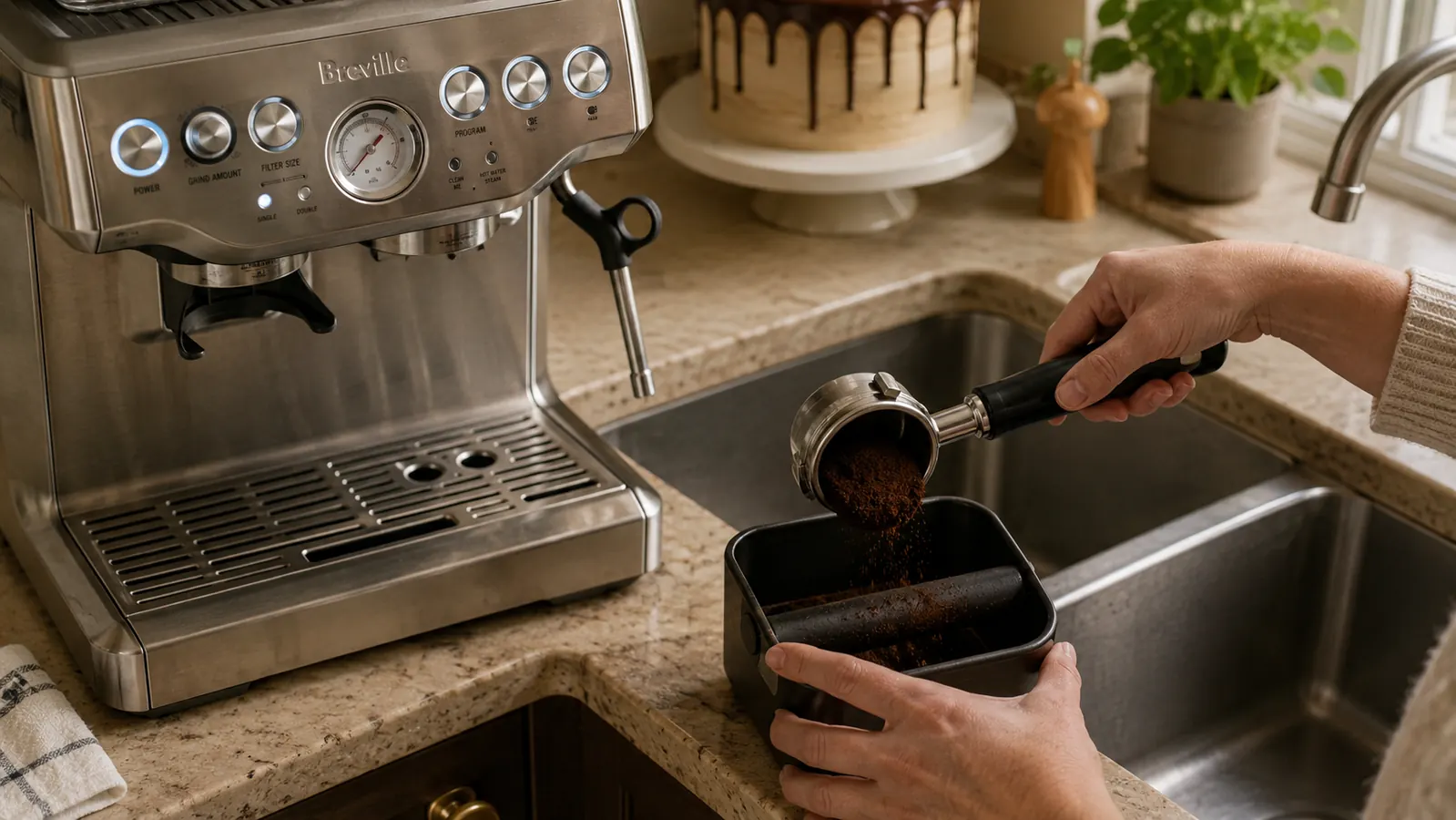
None of this is unreasonable. Real espresso machines are not like a drip coffee maker. But the Barista Express gets positioned as the easy, all-in-one entry point and that framing does new owners a disservice. If you walk in expecting the same effort level as a Nespresso pod machine, the daily cleanup will feel like a grind. If you walk in understanding this is a small appliance with real maintenance needs, you will take it in stride. I have come to enjoy the ritual, but I had to reset my expectations first.
Pressure, Temperature, and Shot Quality After the Learning Curve
Once you find your settings, the Barista Express produces genuinely good espresso. The nine-bar extraction pressure is consistent. The thermocoil heats the water quickly and holds temperature reasonably well for a machine at this price. I was getting shots with proper crema, a round body, and real sweetness in the cup after about two weeks of dialing in. For medium roast coffees from a quality roaster, the results are legitimately good.
Where the limits become visible is in what espresso enthusiasts call the "taste ceiling." The machine is capable enough that your coffee selection and your technique matter more than the hardware. But the built-in grinder is the bottleneck. Spending more on better beans will improve your cup more than any adjustment you can make to the machine settings. And if you ever decide to upgrade the grinder to something like a Baratza Encore or a Niche Zero, you have outgrown the all-in-one concept entirely. That is the inflection point where many Barista Express owners start thinking about the Gaggia Classic Pro and a standalone grinder, which I cover in detail in my Barista Express vs Gaggia Classic Pro comparison.
What I Liked
- Built-in grinder eliminates a separate purchase and saves counter space for new home baristas
- Pulls genuinely good shots with medium and dark roasts once dialed in
- Solid, heavy construction that feels durable and holds up to daily use
- Strong community of users means abundant tips, dialing-in guides, and troubleshooting resources
- Faster warm-up than most machines in this class, ready in under a minute
- The learning curve teaches real espresso technique that transfers to any future machine
Where It Falls Short
- Stepped grinder cannot precisely dial in light roasts, a real problem for single-origin drinkers
- Single boiler requires a wait between pulling shots and steaming milk
- Static from the grinder scatters grounds and requires a daily wipe-down routine
- Serious coffee enthusiasts will outgrow the grinder within six to twelve months
- Milk texturing requires immediate wand purge or residue bakes onto the tip
- No pressure profiling or temperature surfing for those who eventually want that level of control
Who This Is For
The Barista Express is genuinely well-suited for someone making the jump from a drip coffee maker or a pod machine who wants to learn real espresso technique without buying two separate machines to start. If you drink medium or dark roast, make flat whites or lattes most mornings, and want a capable machine that does not require a deep equipment rabbit hole to get a good cup, this is a strong choice. The 4.5-star average across nearly 28,000 reviews is not an accident. Most buyers are in that category and they are happy.
It also works for the buyer who wants a single piece of gear on the counter and is willing to spend a few weeks learning the machine. The community around the Barista Express is large and helpful. There are dialing-in guides, YouTube videos, subreddit threads, and documented settings for hundreds of specific coffees. You will not be starting from scratch alone. For context on what eighteen months of daily use looks like on this machine, the long-term Barista Express review covers wear, durability, and what has held up over time.
Who Should Look Elsewhere
If you are already drinking specialty coffee from a roaster that rotates through light-roasted single origins, this machine will frustrate you. The stepped grinder will not let you dial in precisely enough. You will spend more time compensating than enjoying. In that case, look at a capable standalone grinder paired with something like the Gaggia Classic Pro or consider the Breville Barista Pro, which has a stepless grinder and a more capable steam system.
Skip it also if you are buying this expecting the simplicity of a pod machine. The daily maintenance is real and non-negotiable. If you make milk drinks under time pressure every morning and hate the idea of a minute-long wait for the boiler to switch modes, the single-boiler design will grate on you. And if you think you will be chasing better and better espresso over the next two years, the honest answer is that the Barista Express is a good starting point but you will likely replace the grinder or the whole setup before long. Going into that with clear eyes is better than being surprised by it.
Go in with clear eyes and you will get your money's worth from this machine.
The Breville Barista Express BES870XL is a legitimate entry point into home espresso with a strong track record and a massive owner community. For the right buyer, it earns its place on the counter. Check the current price and read through the questions section on the listing for anything specific to your setup.
Amazon Check Today's Price on Amazon →