
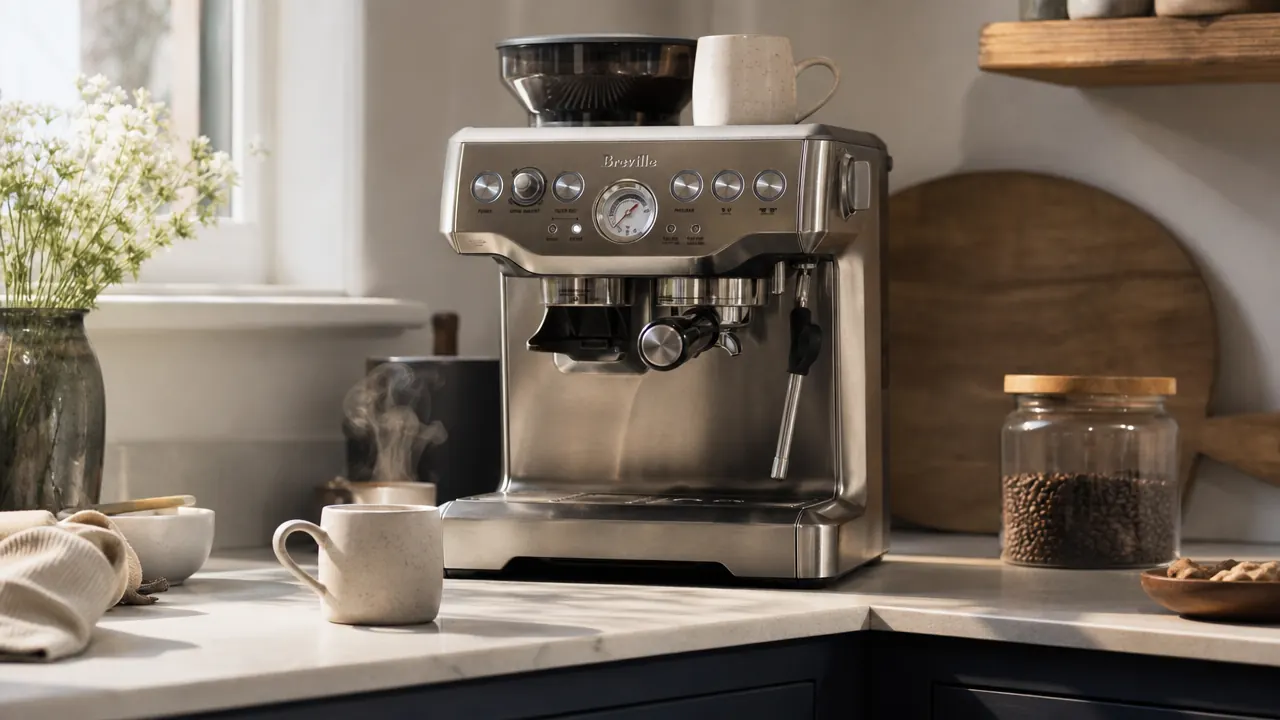
I used to spend a lot each month at the coffee shop two blocks from my house. Not because the coffee was exceptional, which it wasn't, but because I had convinced myself that making real espresso at home required either a serious investment or a tolerance for bitter, under-extracted sludge. I had tried two cheaper machines over the years. Both produced something hot and brown that technically qualified as espresso. Neither was worth drinking.
The Breville Barista Express BES870XL is the machine that finally broke that pattern. I bought it 18 months ago after longer deliberation than I care to admit, and I have pulled two shots from it every single morning since. If you are considering this machine, here is what I wish someone had told me before I bought it, including the parts that are genuinely great and the parts that will frustrate you in year two.
The Quick Verdict
A genuinely capable home espresso machine with a built-in grinder that holds up to daily use. The integrated setup lowers the barrier for beginners without dumbing down the output. Not perfect, but nothing in this price range is, and after 18 months I would buy it again.
Amazon Check Today's Price →Still paying coffee shop prices every morning? The Barista Express pays for itself faster than you think.
At 4.5 stars across 27,000-plus reviews, this is one of the most widely validated espresso machines in its class. Check today's price on Amazon before it changes.
Amazon Check Today's Price on Amazon →How I've Used It
Two shots every morning, seven days a week. Occasionally a third on weekend afternoons. I use medium roast beans almost exclusively, rotating through a few local roasters and whatever whole-bean bag looks good at the grocery store when I am already there. I weigh my beans for the first few months and then stopped when I got consistent enough that it wasn't necessary. My household is two adults. Neither of us drinks decaf. The machine has never had a day off in a year and a half.
I cleaned the steam wand every time after use, descaled the machine every three months following Breville's guide, and backflushed the group head every two weeks. I mention this because my long-term impressions are based on a machine that was maintained the way the manual says to maintain it. Your results will vary if you skip that part, and not in your favor.
My kitchen in Charlotte runs warm in summer, which I mention because ambient temperature affects grinder dose consistency more than most reviews acknowledge. More on that below.
The Built-In Grinder: Where This Machine Lives or Dies
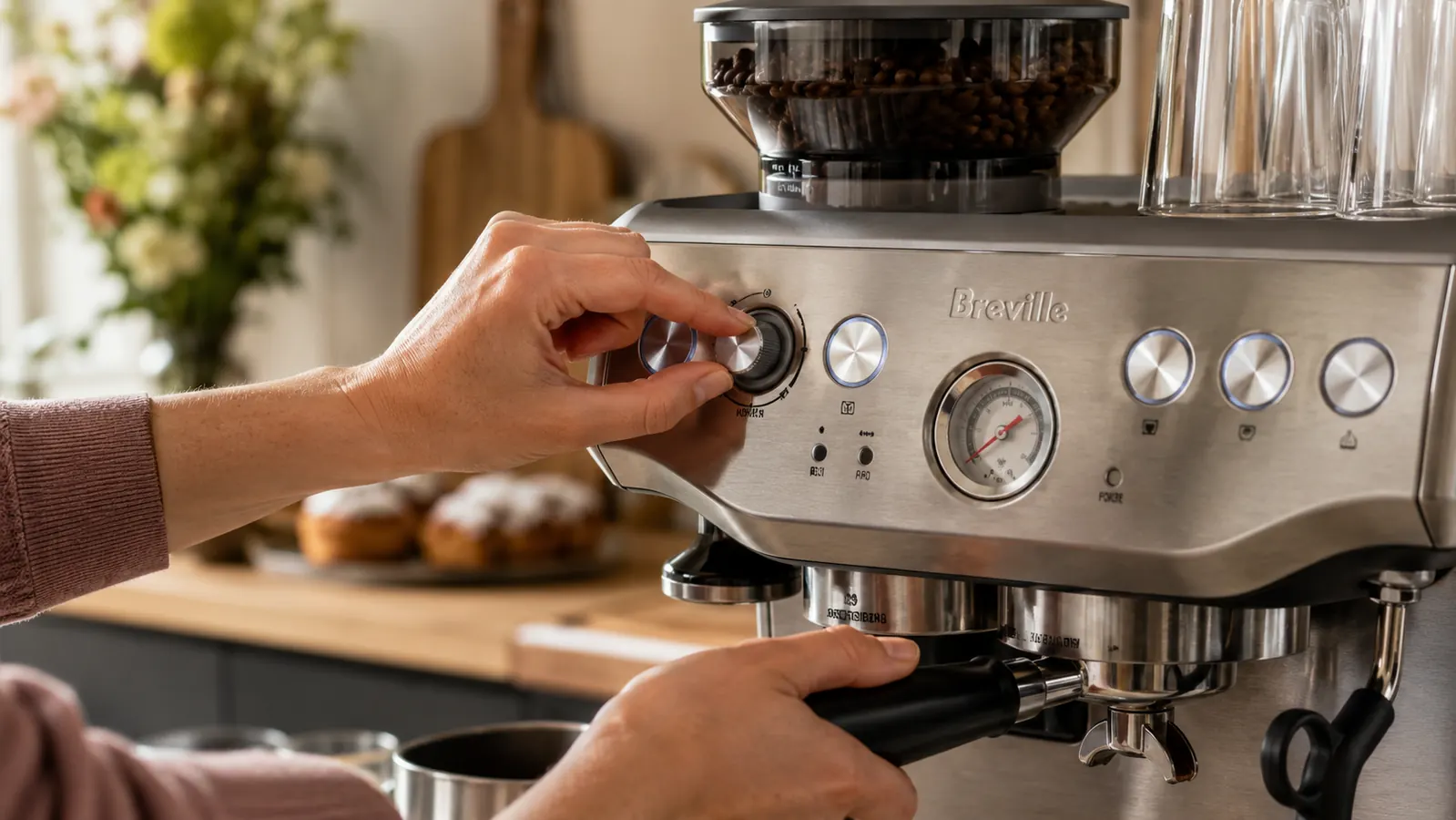
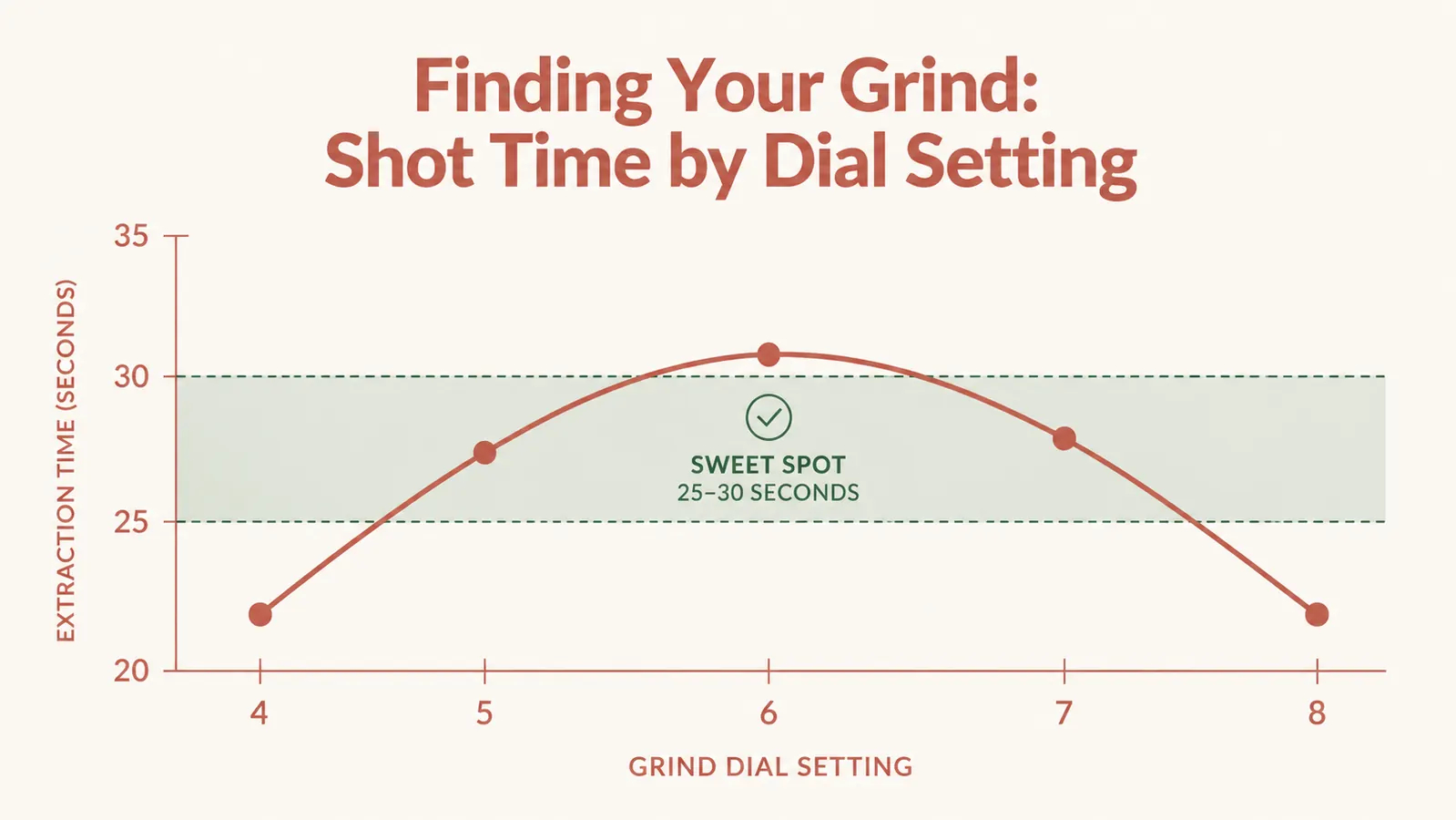
The Barista Express is fundamentally a bet that an integrated grinder is worth trading away some of the flexibility you get with a separate burr grinder. After 18 months, I think that bet mostly pays off, with one real caveat. The conical steel burr grinder has 25 grind settings accessed via a dial on the side. For medium roasts, I live in the 5 to 7 range. The grinder is reasonably quiet for a burr unit, produces consistent particle distribution for the price point, and the dose is dialed in via a separate knob that controls how long the grinder runs.
Here is the real-world limitation: the grinder is not well-suited to light roasts. If you buy light or very light roasted beans, you will struggle to get extraction times in the 25 to 30 second range without over-grinding to compensate. The grind steps are wide enough that finding the precise setting for a finicky light roast sometimes feels like jumping over the sweet spot. For medium and medium-dark roasts, this is a non-issue. I drink medium roast, so it has never been a daily problem for me, but I tested two bags of light roast from a local specialty shop and spent three frustrating mornings chasing extraction before landing somewhere acceptable.
The dose control is reliable. I set mine to fill the double-shot basket in about 16 to 17 grams and it has stayed consistent. In warm weather, the grinder runs very slightly longer before stopping, which tells me the sensor is doing its job but also that ambient heat affects the measurement in a minor way. Not a problem in practice, just something I noticed.
For medium roasts, the integrated grinder is genuinely good. Light roast fans will hit a ceiling that a standalone grinder would clear.
Shot Quality: What 18 Months of Daily Pulls Actually Produces
The pump pressure on this machine is 9 bars at the group head, which is where you want it for espresso. The 15-bar number you see in the product title is the pump's max rating, not the extraction pressure. Breville has an internal over-pressure valve (OPV) set to 9 bars. This is the correct setup. A lot of cheaper machines push 12 to 15 bars through the puck, which over-extracts and tastes harsh. The Barista Express does this right.
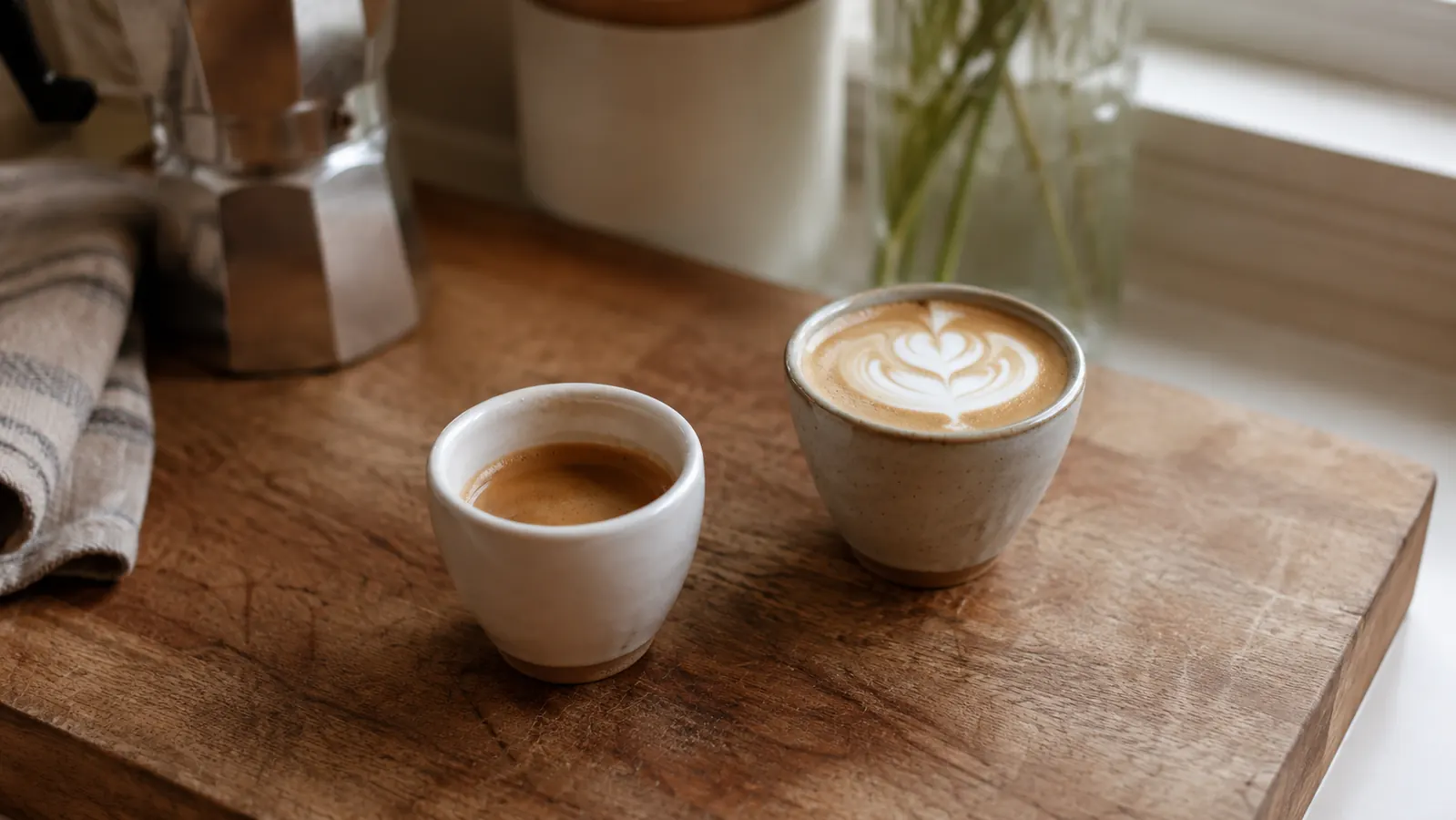
My shots are consistently good. Crema is thick and persistent when I use fresh beans within two weeks of their roast date. Flavor is balanced, with no bitterness if the extraction is dialed in. The machine also has a pre-infusion function that wets the puck at low pressure for a few seconds before the full extraction starts. It is not adjustable, which experienced home baristas will find limiting, but it genuinely helps pull more even shots from denser pucks. For my daily medium roast, I stopped noticing it as a separate step and started just expecting better results.
After 18 months, shot quality has not declined. The group head seals are intact, pressure reads the same as it did on day one, and the boiler heats to temperature in about 45 seconds. I time it sometimes out of habit. It has never taken longer than a minute.
The Steam Wand: Good, Not Great
The Barista Express uses a single boiler, which means it uses the same boiler for brewing and steaming. In practical terms, this means you brew your shot, then wait about 30 seconds for the boiler to ramp up to steam temperature before frothing milk. For a daily routine, this becomes invisible after a week. You pull the shot, grind your coffee beans for the next day's pre-portioned dose, or do nothing in particular for 30 seconds. It is a mild inconvenience that bothers me zero times in a hundred.
The wand itself produces enough pressure to texture milk for a flat white or cortado properly. It will not match the steam power of a dual-boiler machine at two to three times the price, but it does the job for one or two drinks at a time. I can get microfoam with tight, glossy texture if I focus. I cannot do it on autopilot the way I might with a commercial-grade setup, but that is also not what this machine is for.
Cleaning the wand after every use is not optional. Skip it and you will be chiseling dried milk out of the tip within a few days. I wipe and purge every single time. It takes eight seconds. Do not skip this step.
Durability After 18 Months: What Has Held Up and What Hasn't
The body is brushed stainless steel and still looks close to new. I wipe it down most mornings with a damp cloth and it does not fingerprint badly. The portafilter handles show minor cosmetic wear on the rubber collar, nothing functional. The grinder dial has a slightly looser feel than it did at the start, but still clicks into position cleanly. The drip tray float indicator has been reliable, though I manually empty the tray before it ever reaches maximum because I am a person who wipes counters and empties drip trays.
The one component that has required attention is the steam tip. At month 12, I noticed the steam pressure felt slightly weaker than usual. Turned out the tip had a tiny milk deposit that a soak in a cleaning solution cleared immediately. Not a defect, just maintenance that I had been slightly lazier about during a busy stretch at work. Lesson relearned.
The machine has never failed to produce a shot or refused to turn on. I have not needed to contact Breville support. The two-year warranty covers manufacturing defects, and at 18 months in I have had none.
What I Liked
- Integrated grinder removes the need for a separate purchase, lowering the total setup cost
- Consistent 9-bar extraction pressure produces genuinely good espresso for the price range
- Builds to pull-ready temperature in 45 seconds or less
- Pre-infusion function noticeably improves shot evenness without any user adjustment
- Brushed stainless body holds up well to daily use with basic cleaning
- 27,000-plus reviews at 4.5 stars reflects a real track record, not launch-day enthusiasm
Where It Falls Short
- Grinder struggles with light roasts; wide grind steps make fine-tuning difficult for specialty beans
- Single boiler means a 30-second wait between brewing and steaming
- Steam wand power is adequate but not impressive; dual-boiler machines at higher prices outperform it
- Grind adjustment requires running some beans through to purge the old setting, which wastes a small amount of coffee
- No flow profiling or pressure profiling for advanced users who eventually want more control
Alternatives I Considered
Before buying the Barista Express, I seriously looked at the Gaggia Classic Pro paired with a separate Baratza Encore grinder. The combo comes in at a similar price when you account for both. The Gaggia has a better boiler configuration for experienced users, more steam power, and the ability to swap grinders as your palate develops. If you already know what you are doing with espresso and want a machine you can grow into more aggressively, that path is worth considering. My full comparison is over at the Breville Barista Express vs Gaggia Classic Pro review if you want to dig into the differences side by side.
I chose the Barista Express because I wanted a single appliance with a simpler morning routine. I did not want to coordinate two devices, two grinder settings, and two cleaning protocols. For my use case, that was the right call. For someone who already knows they want to go deeper into espresso, the modular route has real advantages.
Who This Is For
This machine is built for the person who is currently spending serious money at coffee shops, has tried cheap espresso machines and been disappointed, and wants to close the gap without buying a high-end setup that requires a barista certification to operate. If that is you, the Barista Express is a strong match. It is also a good fit if you drink medium roast beans, pull one to three drinks a day, and are willing to spend two to three weeks dialing in your grind and dose. The learning curve is real but short. I was pulling reliably good shots by day ten.
If you want to understand more about what separates a home espresso machine from a daily coffee shop habit in terms of cost and quality, the 10 reasons a home espresso machine pays for itself breaks down exactly that math.
Who Should Skip It
If you are serious about specialty coffee and drink primarily single-origin light roasts, the grinder in this machine will limit you within six months. You will be chasing a grind setting that the dial does not quite land on, and the frustration will push you toward an upgrade. Better to start with a separate capable grinder and a simpler machine in that case. This machine is also probably more than you need if you are only making one drink every other day. The preheat time and the maintenance protocol are worth it when you use it daily. For occasional use, a good pod machine honestly makes more sense.
The grinder is built in, the price is right, and 27,000 reviews say it delivers. See today's price before it moves.
The Breville Barista Express BES870XL is one of the most reviewed home espresso machines on Amazon for a reason. Check the current price and availability.
Amazon Check Today's Price on Amazon →