

I have read dozens of KitchenAid Artisan reviews. They all tell you the same things: beautiful machine, great attachment system, built to last. They are not wrong. But none of them told me what I actually needed to know before handing over the money. Nobody mentioned that this mixer will literally walk across my counter when the dough gets stiff enough. Nobody explained what the tilt-head design costs you when you are doing enriched bread doughs and need the bowl locked in place. And not one review I found laid out what that attachment ecosystem actually costs once you start buying into it. That is what this review is about.
I bought the KitchenAid Artisan KSM150PS about two years ago after getting serious about bread baking. I wanted an honest take before I bought it and could not find one, so here it is. My baking leans toward yeast breads, brioche, and enriched doughs. I also make cookies and cakes. The Artisan handles some of that well and some of it with visible strain. Here is the breakdown, starting with the things that surprised me.
The Quick Verdict
A genuinely capable home mixer that earns its place in most kitchens, but the motor limits are real, the walking problem is annoying until you fix it, and the attachment rabbit hole can double what you spend. Go in knowing that and you will not be disappointed.
Amazon Check Today's Price →Every glowing review is right that this mixer is excellent. They just forgot to mention the part about buying a non-slip mat on the same day.
The KitchenAid Artisan KSM150PS has a 4.7-star rating from over 22,000 buyers across more than 20 colors. Check today's price and current color availability on Amazon before you decide.
Amazon Check Today's Price on Amazon →The Walking Problem: What Nobody Explains
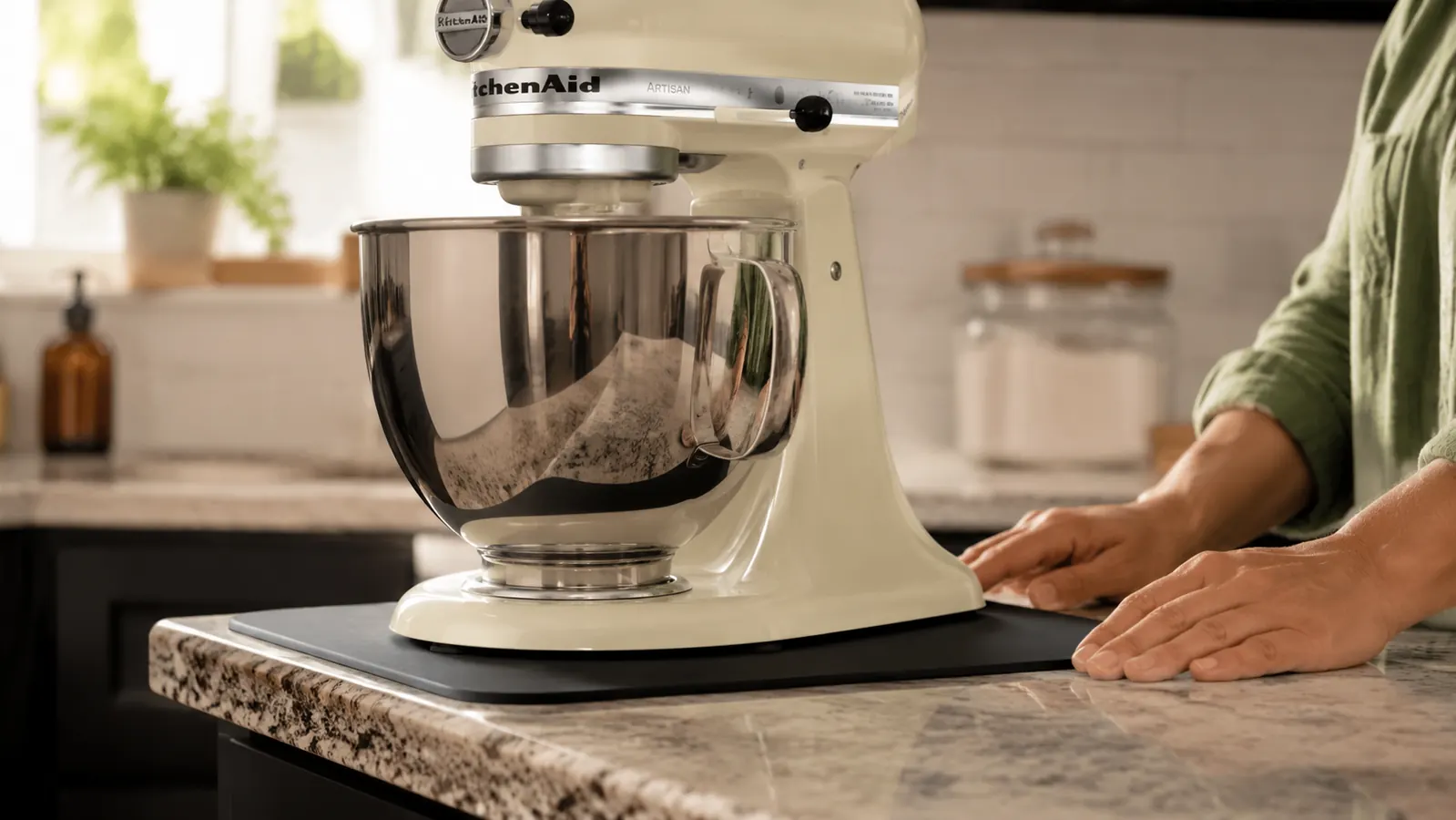
Here is the thing about a 26-pound stand mixer: you assume the weight keeps it in place. It mostly does. But on stiff doughs, specifically anything with a hydration below about 60 percent, this machine will creep. Not dramatically. It does not scoot off the counter. But I have had it shift two to three inches across my counter surface mid-knead on a tight whole-wheat dough. The first time it happened I thought I had placed it badly. By the third time I understood: this is just what a tilt-head mixer with a heavy dough load does. The motor torque during kneading creates enough vibration to walk the machine forward, especially on smooth laminate or tile counters.
The fix is simple and cheap: a silicone non-slip mat under the base. I use a basic kitchen non-slip mat that is budget-friendly, and the walking stopped completely. But I had to figure this out on my own. No review I read before buying mentioned it. No product description mentions it. The box does not mention it. So consider this your warning: before you bake your first stiff dough, put something grippy under the machine. Problem solved permanently.
The Motor Limit Is Real, and Here Is Where You Will Find It
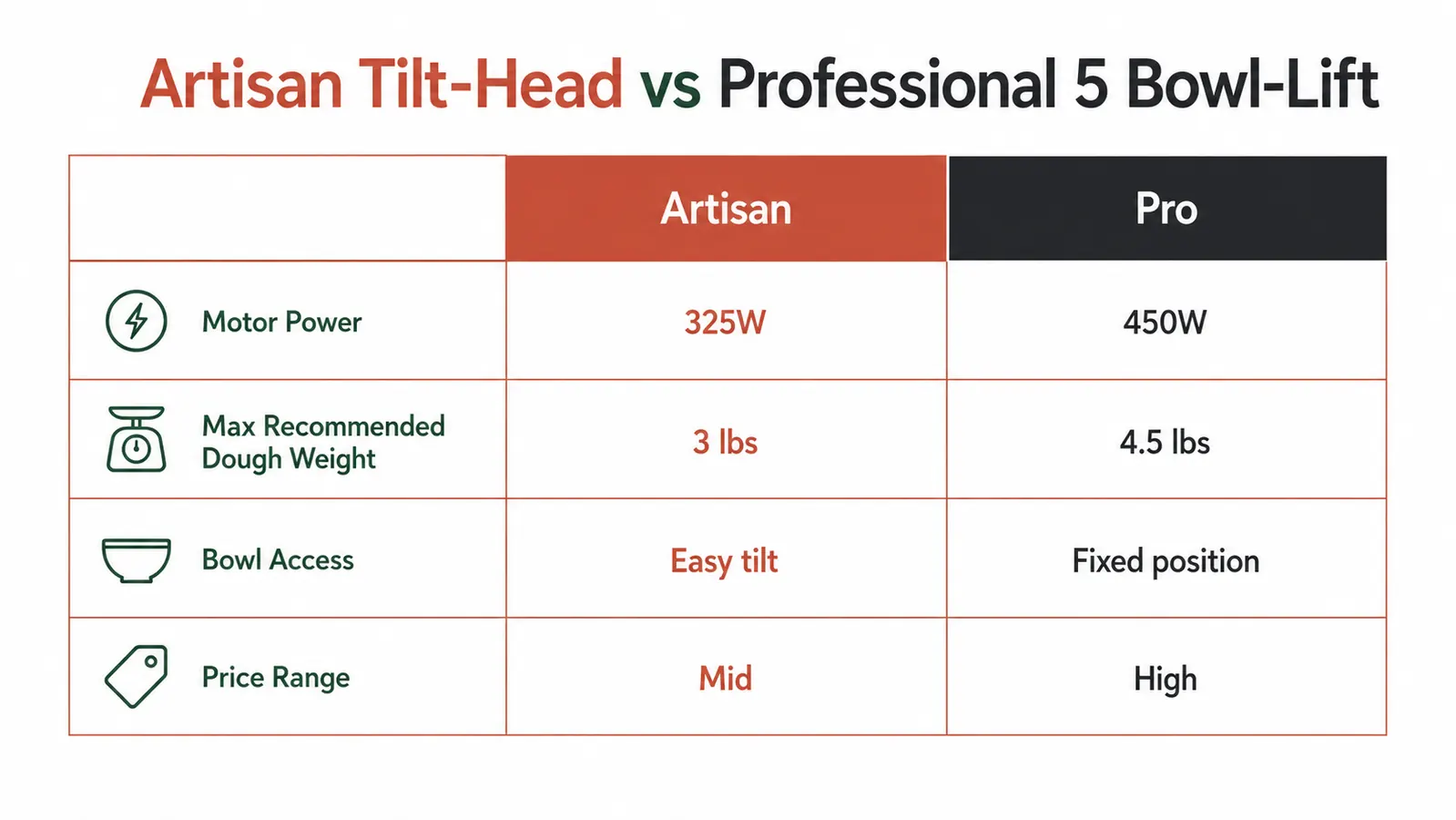
The Artisan runs a 325-watt motor. For most home baking, that is more than enough. Cake batters, cookie doughs, whipped cream, meringue, light pizza doughs: none of these stress this machine at all. Where the motor reveals its ceiling is on stiff doughs. Bagel dough is the classic test. Pretzel dough is another. Even a tighter brioche with a lot of butter can make this motor work visibly harder. You can hear it. The pitch of the motor drops, the machine slows slightly, and if you have your hand on the housing you can feel it getting warm.
KitchenAid's official guidance is to not exceed speed 2 on yeast doughs, and they mean it. The problem is that most online bread recipes say things like 'knead on medium speed for 8 minutes' and assume you are reading a KitchenAid manual when you set the dial. Medium-speed kneading on a 325-watt motor on a stiff dough is how people end up with warranty claims or burned-out machines. Speed 2 is where you stay, full stop. On a single batch of standard bread dough at reasonable hydration, this is not a problem at all. A double batch pushing the bowl's capacity limit is where I start paying careful attention.
I want to be fair: the thermal protection system on these machines exists for a reason, and it kicks in before you do permanent damage if you push too hard. The mixer will shut itself off. It is an annoyance, not a disaster. But it is a signal that you are asking more than this motor is designed to give. If your baking is primarily stiff yeasted doughs at high volume, the KitchenAid Professional 5 Plus with its 450-watt motor exists for exactly that reason. I have a detailed comparison of both machines in my piece on the KitchenAid Artisan vs Professional 5 if you want to dig into the wattage and bowl-lift differences side by side.
Tilt-Head vs Bowl-Lift: The Tradeoff They Gloss Over
The tilt-head design is genuinely convenient for everyday baking. You lift the head back, add ingredients, lower it, lock it, go. For adding flour cup by cup to a cookie dough or scraping down the sides of a cake batter bowl, the tilt-head is faster and less fussy than a bowl-lift. But there is a tradeoff that matters for bread bakers specifically, and it is almost never discussed.
On a bowl-lift machine like the Professional 5 Plus, the bowl is mechanically locked into the yoke with a firm positive connection. It does not move. On the tilt-head Artisan, the bowl sits in a fixed collar but is not mechanically locked the same way. On light to medium doughs, this is a non-issue. On very stiff doughs that want to climb the dough hook, the bowl can flex very slightly and the dough will try to lift it. You will notice this before it becomes a real problem, but it adds one more variable to manage. If you are primarily a bread baker who does enriched doughs, very stiff doughs, or wants to max out the bowl's capacity regularly, the bowl-lift design of the Pro is genuinely better for that use case.
This is not a defect in the Artisan. It is a design choice that makes the machine more convenient for the majority of home baking tasks while accepting a constraint on the heavy-dough end of the spectrum. Just know which category most of your baking falls into before you choose.
The tilt-head is faster and friendlier for everyday baking. The bowl-lift is more stable for serious bread work. The mistake is buying the wrong one for your actual baking habits.
Color and Finish: What the Beautiful Photos Do Not Show
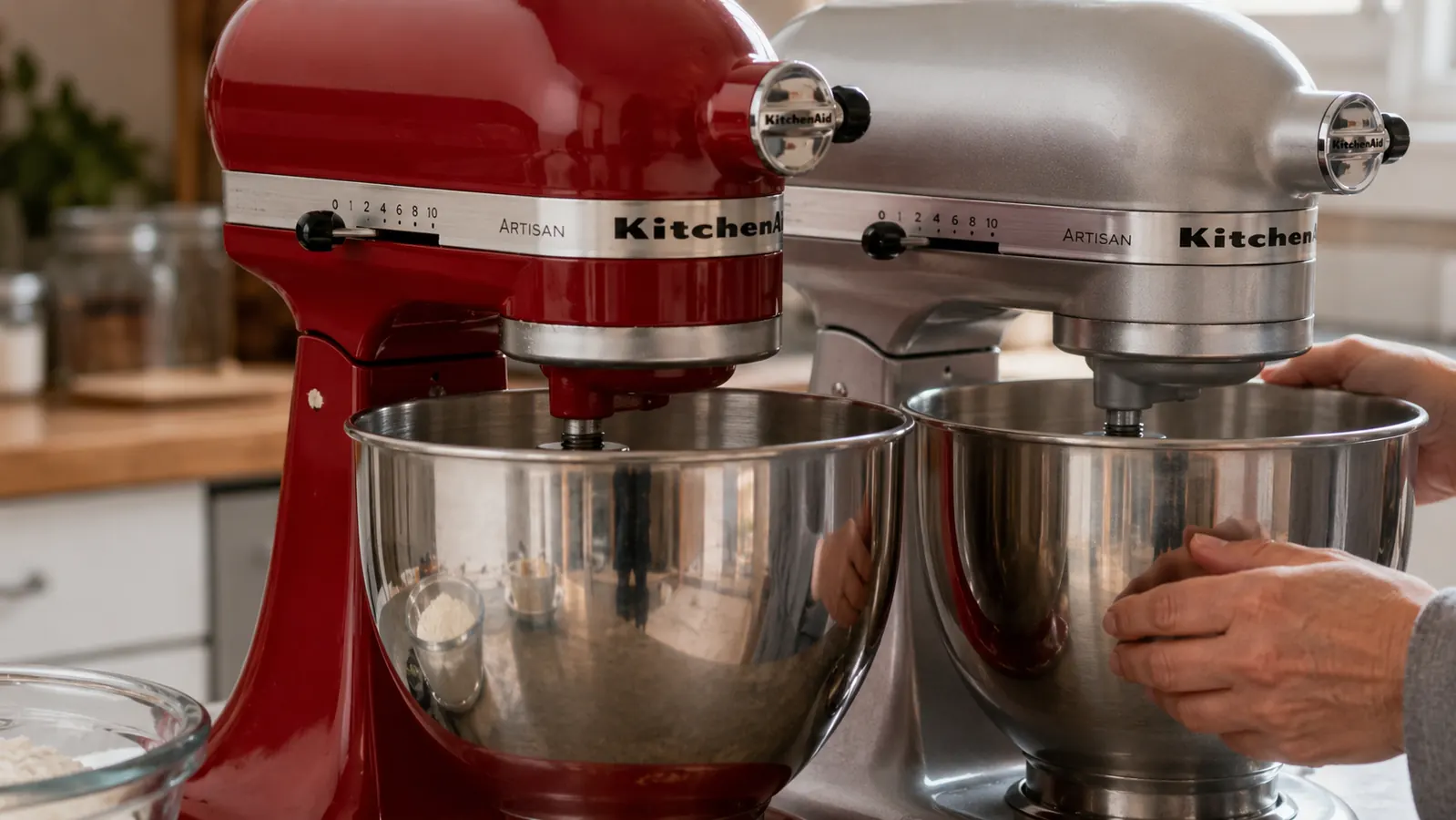
KitchenAid sells the Artisan in over 20 colors, and the photography online is excellent. Here is what I learned from bakers who bought the darker and more saturated colors: the painted finish on the die-cast metal housing can chip, and it tends to chip in two specific places. The first is the underside of the tilt-head where it contacts the body when you lower it down. The second is around the attachment hub. If you are deliberate about setting the head down gently and careful with attachments, this is a minor or nonexistent issue. If you bake in a hurry and set the head down with some force, you will eventually see paint damage.
Colors that show this most visibly are the darker saturated ones: Empire Red, Boysenberry, Onyx Black. Lighter colors like Contour Silver, Milkshake, and White tend to be more forgiving because chips are harder to see and the finish chips less visibly against the base color. I bought Contour Silver partly for functional reasons. If you are set on a bold color, the machine is still excellent, just plan to be more deliberate about how you handle the head. This is the kind of thing a friend who bakes would tell you. Most reviews do not.
The Attachment Ecosystem: Wonderful and Expensive
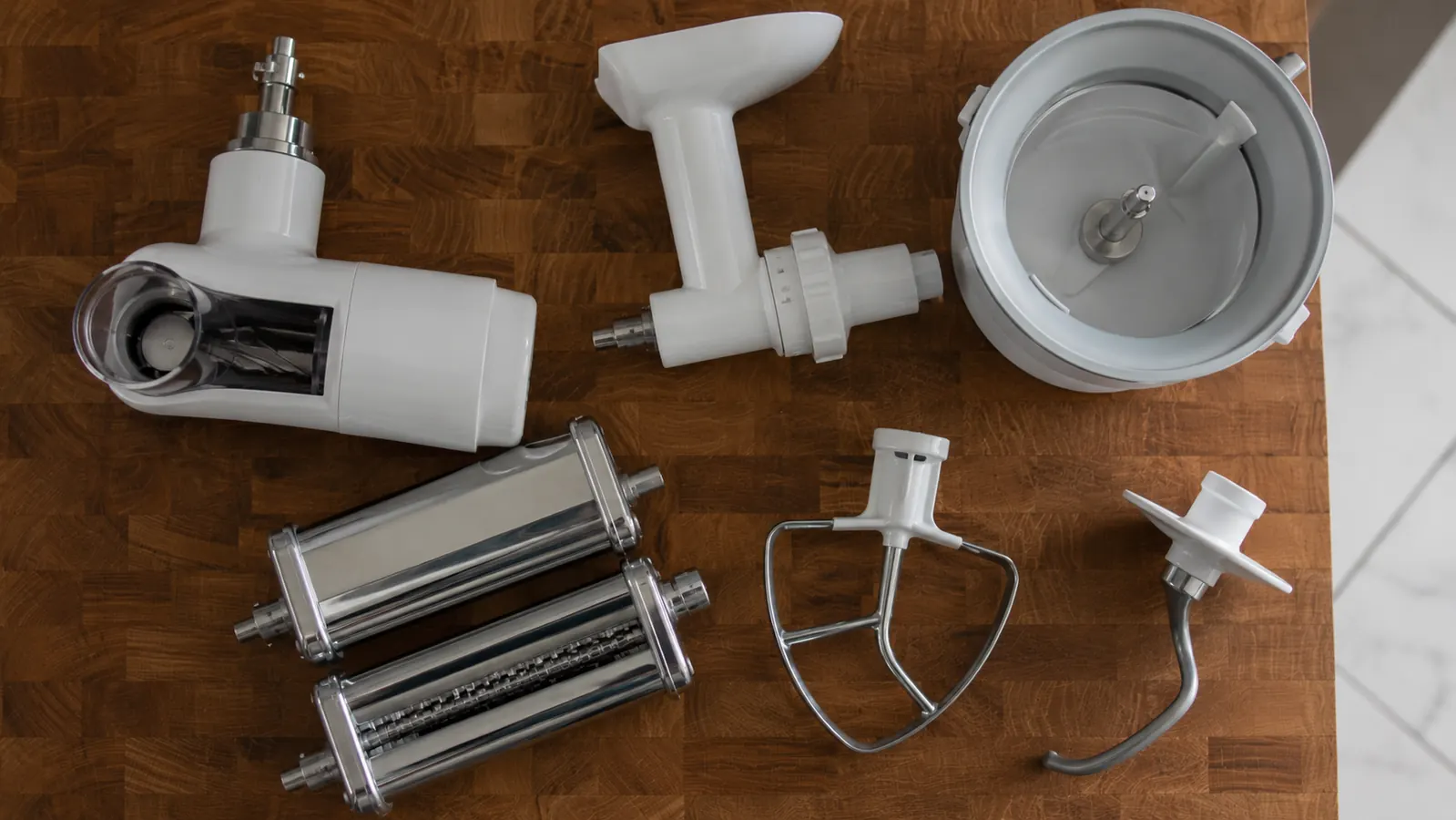
The attachment system is legitimately one of the best arguments for buying a KitchenAid over competing stand mixers. One power hub, dozens of attachments, and most of them are well-made. The pasta roller set, the grain mill, the meat grinder, the spiralizer, the ice cream maker bowl. If you get into this machine, the attachment possibilities will start looking appealing within six months of ownership. Here is the part they bury in the fine print of every enthusiastic attachment guide: it adds up fast.
The pasta roller set runs in the mid-to-upper range depending on whether you buy a bundle or individual rollers. The grain mill is another moderate investment. The meat grinder attachment is budget-friendly. An ice cream maker bowl is moderately priced. If you buy three or four of these over the first couple of years, which is very easy to do once you have the machine and start baking more seriously, you have spent a substantial amount on top of the mixer itself. The Artisan at current pricing is moderately priced. So your total system investment can approach the higher end if you buy into it enthusiastically.
None of that is money wasted. The attachments work well. But before you tell yourself you are buying a premium mixer, understand that you are really buying into a premium platform with significant ongoing costs if you use it the way KitchenAid designs you to. That is not a criticism. It is just the full picture.
Bowl Capacity: The 5-Quart Number Is a Guideline, Not a Guarantee
The 5-quart stainless steel bowl is a real selling point. It sounds like plenty of room, and for most single batches it is. Where things get complicated is when you read recipes that say something like 'makes enough for 8 dozen cookies' and you assume the Artisan can handle a full recipe in one go. It sometimes cannot.
The effective mixing capacity depends heavily on what you are making. For light batters and whipped things, the 5-quart bowl is nearly all usable space. For dense doughs, the practical limit is less because the dough needs room to move and fold around the hook. I can comfortably fit about 2.5 to 3 pounds of bread dough and get good results. Push much past that and the dough starts balling up on the hook without kneading properly. A recipe scaled for a double batch of dinner rolls might need to be done in two runs. This is not unusual for a home stand mixer, but some reviewers describe the Artisan as though it can handle anything you throw at it and that sets a wrong expectation.
What I Liked
- Handles everyday baking including cookies, cakes, batters, and moderate bread doughs without any complaints
- Tilt-head design is genuinely faster and more convenient for adding ingredients during mixing
- Attachment ecosystem is unmatched in breadth among consumer stand mixers, all on one hub
- Die-cast metal housing and stainless bowl are built for years of use, not years until the warranty runs out
- Over 20 colors, more than 22,000 reviews at 4.7 stars, and a long track record of consumer reliability
- The non-walking fix is cheap and permanent: a silicone mat under the base costs very little
Where It Falls Short
- 325-watt motor reaches visible strain on stiff doughs like bagels and tight enriched breads, especially at higher volumes
- Walking across smooth counters on dense doughs is a real problem until you put a non-slip mat under it
- Tilt-head bowl is not mechanically locked like a bowl-lift, which matters when doing heavy bread work near capacity
- Painted finish on darker colors can chip around the head hinge and attachment hub with rough handling
- Attachment ecosystem that looks like a one-time purchase becomes an ongoing investment if you bake broadly
- Practical dough capacity on bread is closer to 3 lbs than what the 5-quart number implies
Who This Is Actually For
You bake a real variety of things. Cookies, cakes, occasional bread, maybe a batch of pasta once the attachment arrives. Your bread recipes are mostly standard hydration sandwich loaves, pizza doughs, and enriched rolls, not high-volume bakery-style production. You want a machine that is pleasant to use and does not need to be coddled, and you are willing to take twenty seconds to set it down gently and keep a mat under it. You want the attachment platform to grow into over time. The KitchenAid Artisan is the right machine for this person and there is a reason it dominates its category. The 4.7 stars across over 22,000 reviews reflects genuine satisfaction from real bakers.
Who Should Skip the Artisan and Buy the Pro Instead
If bread is your primary reason for buying a stand mixer, and specifically if you make tight doughs regularly, bagels more than occasionally, or double batches of dense enriched doughs, the Professional 5 Plus is worth the extra money. The bowl-lift, the 450-watt motor, and the locked bowl design change the experience on those specific tasks in a way that matters. The Artisan is not a bad bread machine. It is a great all-purpose machine with a narrower bread ceiling than most reviewers admit. Know which one your actual baking life calls for. A full side-by-side breakdown is in my article on the KitchenAid Artisan vs Professional 5 if you want the specifics on what the Pro buys you and where it gives up ground to the Artisan.
Also skip the Artisan if you are on a strict budget and do not bake frequently enough to justify the price. The machine earns its cost over time for a baker who uses it weekly. If you bake once or twice a month and never push the machine, you may find that a well-built hand mixer handles your actual needs for a fraction of the price. The Artisan rewards commitment to baking. It does not reward buying for the occasion.
You now know the things the product page will not tell you. If this machine still makes sense for your baking, check current pricing and color availability below.
The KitchenAid Artisan KSM150PS is sold in more than 20 colors with regular pricing fluctuations. Today's price on Amazon may be different from what you have seen elsewhere. Check current availability before you decide.
Amazon Check Today's Price on Amazon →