
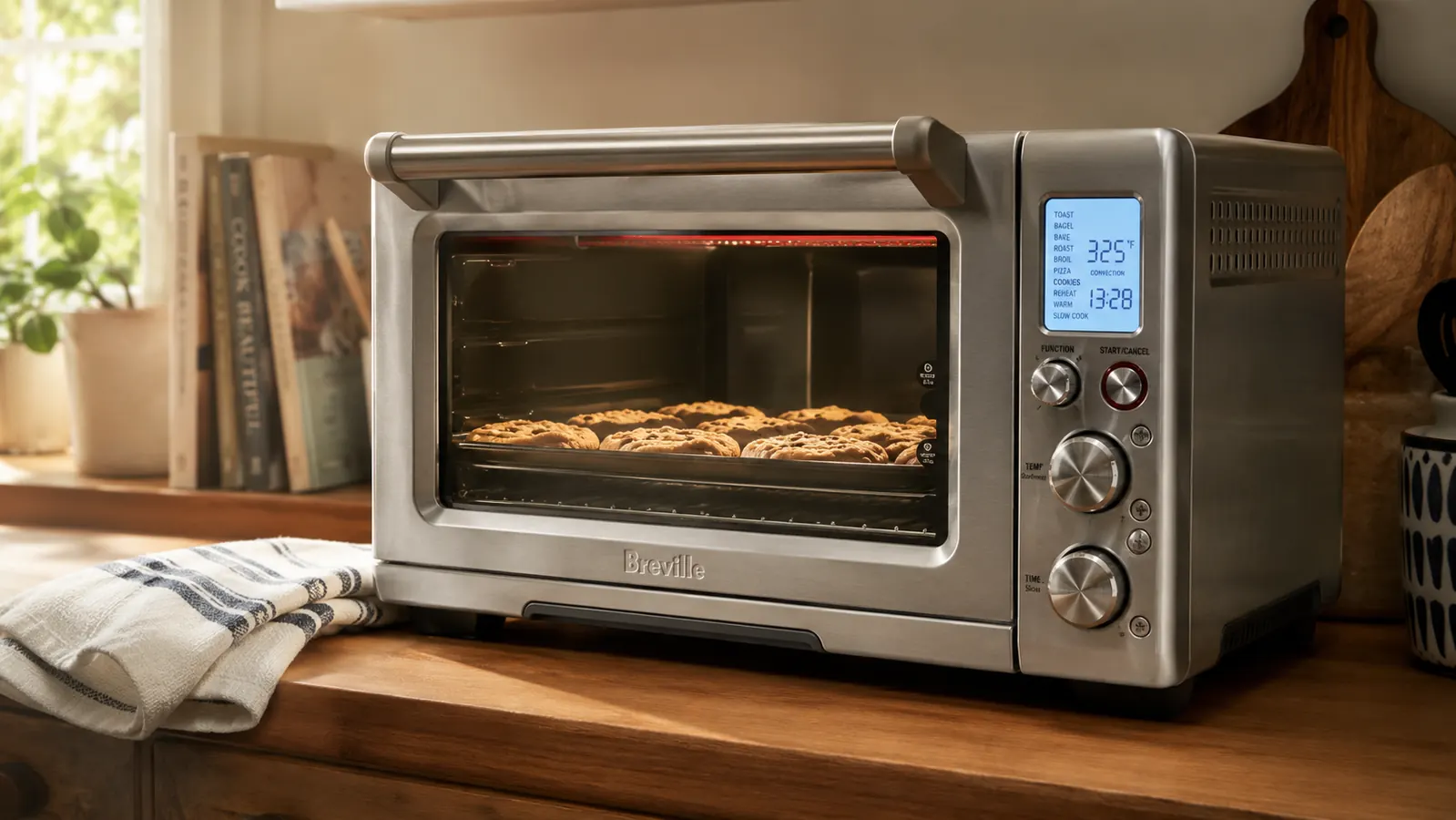
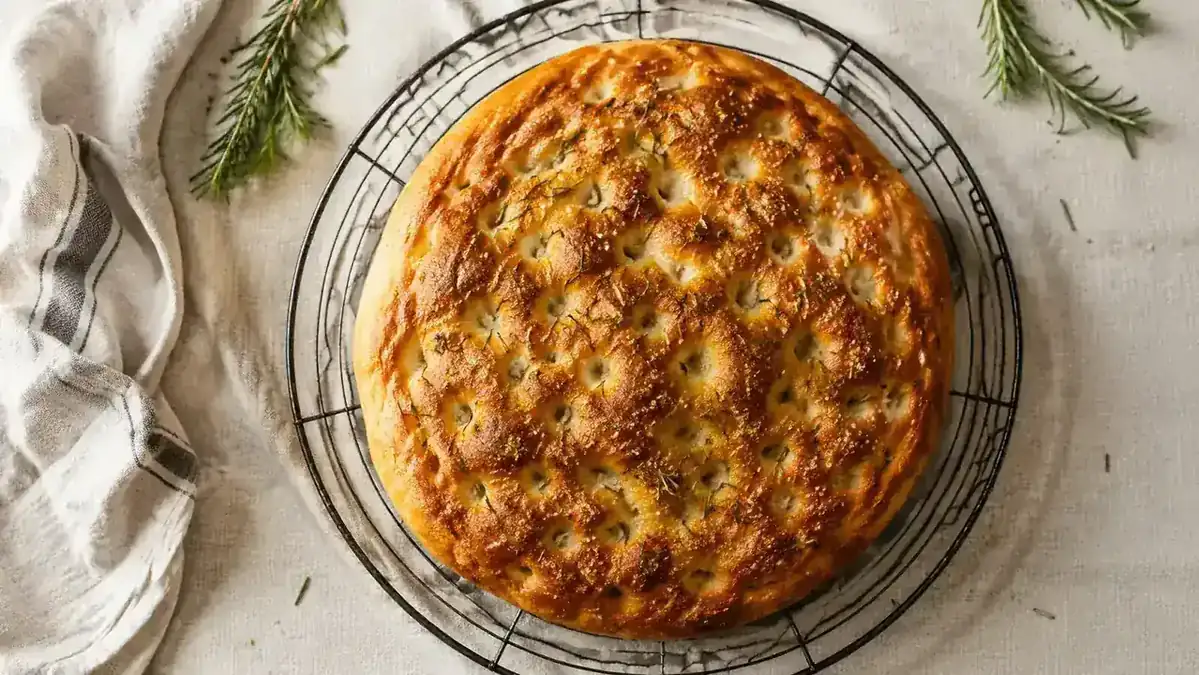
My full-size oven has lied to me for twenty years. Set it to 350 degrees and I get 325 in the back left corner and 375 near the right heating element. I learned to rotate my pans at the fifteen-minute mark out of pure habit, the way some people knock on wood. Then I started using the Breville Smart Oven Pro BOV845 regularly about two years ago, partly out of convenience and partly out of frustration, and something shifted. My chocolate chip cookies started coming out the same color on both sides. My scones rose evenly. A pan of focaccia browned from edge to edge without me doing anything about it. I want to be honest with you about what this oven does well, what its limits are, and whether it belongs in your kitchen.
I have been baking weekly for about sixteen years. Not as a profession, but as the kind of person who will spend a Saturday afternoon on a single loaf of sourdough and consider that a good use of a Saturday. I bake cookies, scones, dinner rolls, focaccia, and the occasional croissant batch when I have the patience. The BOV845 has become my first-choice oven for everything under about twelve inches wide. Here is what I have found.
The Quick Verdict
A genuinely precise countertop oven that earns its place in a baker's kitchen, with one real limitation on capacity you need to know upfront.
Amazon Check Today's Price →Your oven is guessing. This one actually knows the temperature.
If uneven browning and unpredictable results have you rotating pans and second-guessing every timer, the Breville BOV845 solves the core problem. Check today's price on Amazon before deciding.
Amazon Check Today's Price on Amazon →How I Have Used It
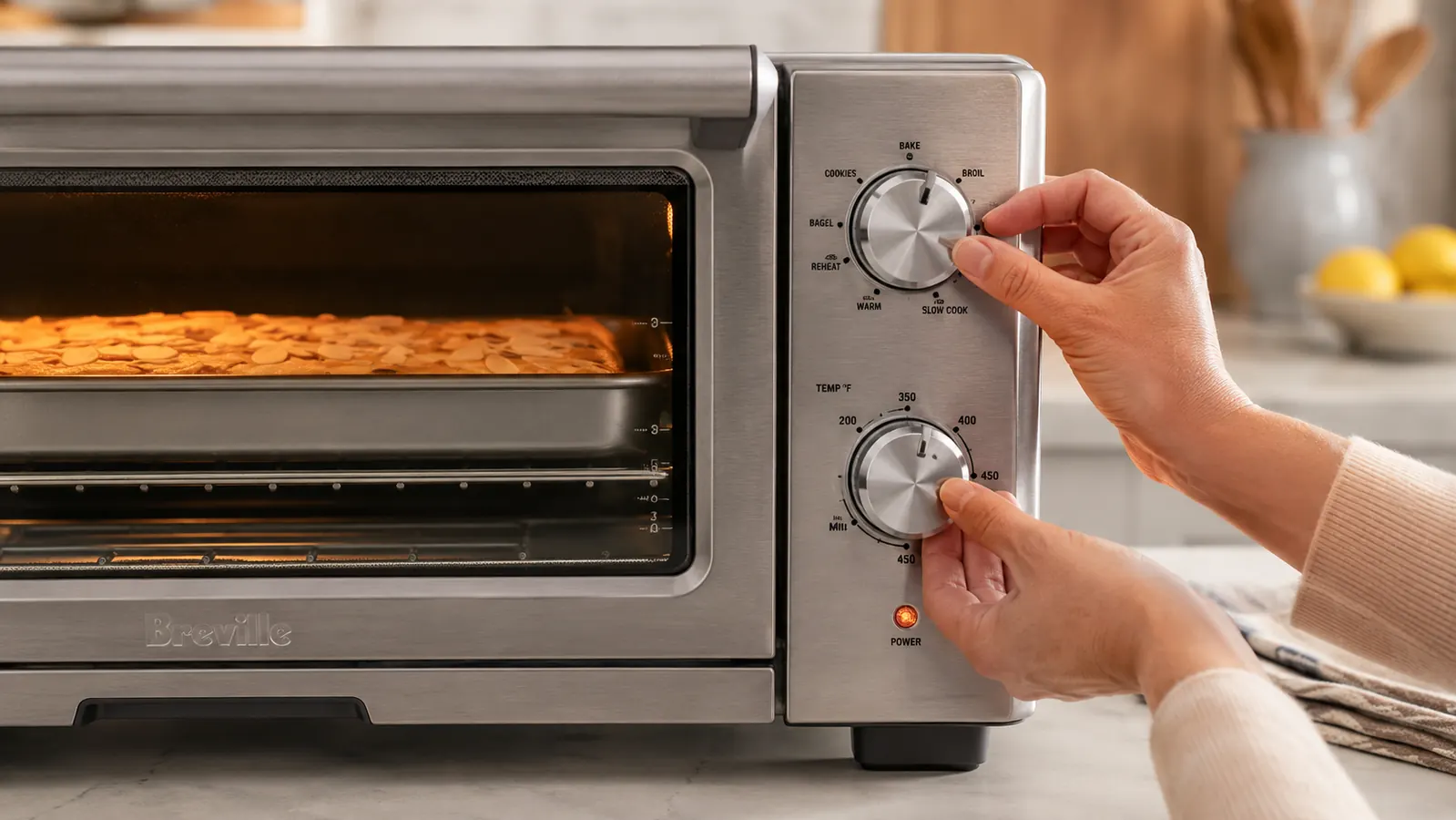
The BOV845 lives on my counter full-time. I use it at least four or five times a week, including most of my actual baking sessions. The oven preheats noticeably faster than my full-size range, which Breville calls 'Element IQ,' where the heating elements adjust their output based on the function you select. On the Bake setting the lower elements carry more of the load. On Broil the top elements take over. On Convection Bake a fan circulates air and the heat distributes in a way my old oven simply cannot replicate.
Over two years I have run this oven through cookies more times than I can count, along with scones, biscuits, focaccia, small sandwich loaves, croissants, galettes, and a lot of roasted vegetables that fall outside the baking category but still taught me something about how the heat moves. I have also baked in it alongside my full-size oven during holiday baking weeks, which gave me a direct A-to-B comparison across the same doughs and batters on the same days.
Baking Performance: Cookies, Bread, and Pastry
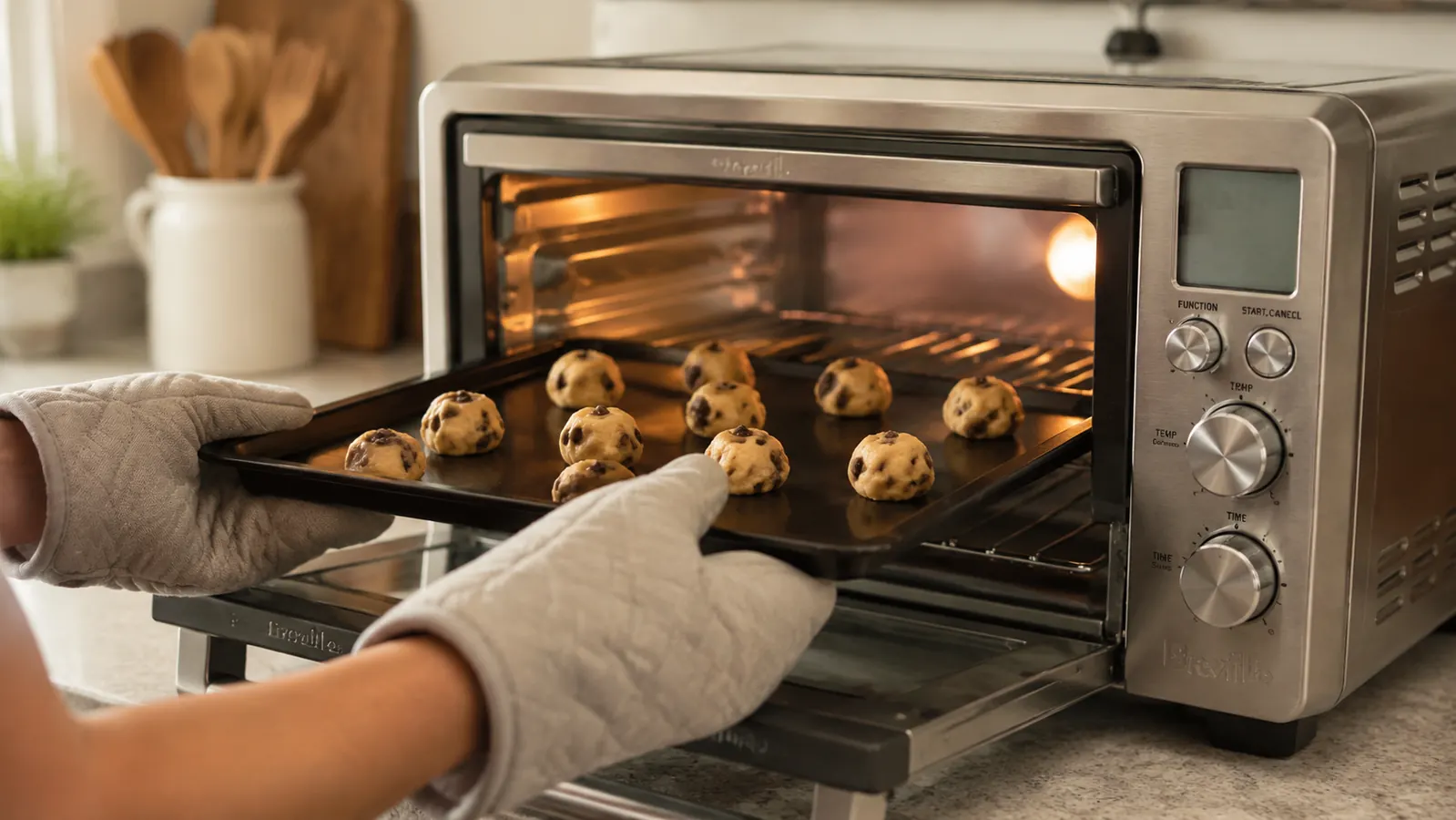
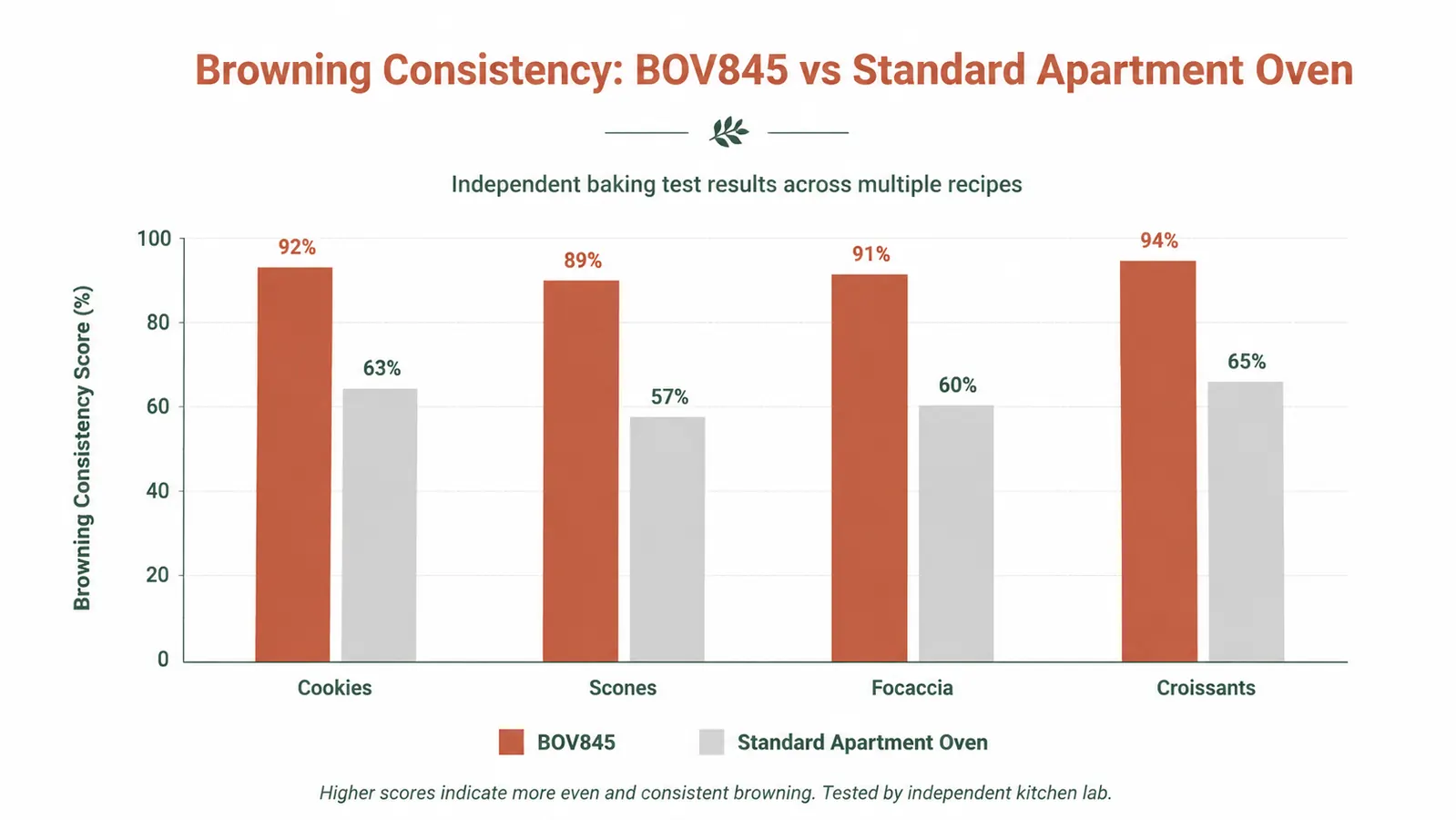
Cookies are the truest test of even heat distribution. You want the same color on the left cookie as the right one, on the front as the back. In my full-size oven that never happens on the first sheet. In the BOV845 on Bake at 325 degrees, my chocolate chip cookies come out consistently golden across the whole pan. Not perfectly identical, but close enough that I stopped rotating sheets about eight months ago and the results stayed good.
Scones were actually where this oven impressed me most. Scones require a high-ish heat (I run mine at 400) and they need to rise fast and brown evenly before the inside overcooks. The BOV845 handles this with what I can only describe as precision. The tops go golden and the sides develop a slight crust without the bottoms going dark the way they do on a cheap baking sheet in my range. I have made the same scone recipe dozens of times in both ovens, and the BOV845 version is better more often.
Bread is the category where you hit the size wall. The BOV845 fits a pan up to 13 by 9 inches, which covers most baking sheet work and a standard loaf pan. But a Dutch oven for sourdough does not fit inside comfortably. I tried once with a three-quart enamel pot and it worked, barely, but the clearance on top was minimal and I worried about the finish. If sourdough in a Dutch oven is your primary goal, look at the larger BOV900 instead. For sandwich loaves in a standard 9 by 5 pan, the BOV845 bakes a genuinely good loaf with an even top crust.
I stopped rotating my cookie sheets eight months ago. The results stayed exactly the same. That is the single clearest proof that this oven actually does what it says.
Temperature Accuracy and the Element IQ Difference
I used a separate oven thermometer for the first three months. In my full-size oven, a 350-degree setting produces readings that wander between 325 and 375 depending on where you stick the probe. The BOV845 at 350 sits within about ten degrees of target, and it holds that temperature more consistently once it is up to heat. This matters more than it sounds. Butter-heavy doughs like croissants and biscuits are temperature-sensitive. If your oven is hot, the butter melts before the structure sets and you lose the layers. The BOV845's tighter temperature control is what you are actually paying for.
Preheat time is another genuine practical advantage. The BOV845 reaches 350 degrees in about seven to eight minutes. My full-size oven takes fifteen to twenty. Over a year of regular baking sessions that adds up to real time saved, but more importantly it means I can work more spontaneously. If I want to throw a quick batch of biscuits together, I am not waiting for a large oven to come up to temperature. I can have dough mixed and shaped in about the time the BOV845 needs to preheat.
Convection Mode for Baking: When to Use It and When to Skip It
The BOV845 has both a standard Bake setting and a Convection Bake setting with the fan running. I use Convection Bake for most cookies and sheet pan work because the circulating air promotes more even browning and slightly faster cook times. General guidance is to reduce your temperature by about 25 degrees when switching from conventional to convection, and that has held true in my experience. If my recipe says 375 on a conventional oven, I run 350 on Convection Bake in the BOV845.
Where I turn the fan off: anything that needs a delicate rise. Cream puffs and some types of custard tarts bake better on standard Bake because the airflow can push the surface before it sets. Croissants I do at standard Bake for the same reason. The BOV845 gives you the choice, which is the right call. Not everything wants convection, and having a machine that lets you decide is better than one that just defaults to fan-on for everything.
One note that nobody seems to mention in reviews: the convection fan is audible. It is not loud, but if you have a quiet kitchen and you are used to a fanless conventional oven, you will notice it. I adapted quickly. My partner did not care at all. I mention it only because I have seen people surprised by it.
Build Quality and Two Years of Daily Use
The BOV845 is brushed stainless on the exterior. After two years of regular use the finish still looks good. There are a handful of small grease spatters near the back that I have not managed to fully remove, but the door glass cleans easily and the overall exterior is holding up the way I expected from a Breville product. The interior is non-stick coated and has stayed in reasonable shape. I do not use abrasive scrubbers on it.
The door seal is solid and I have not noticed any significant heat leaking from the seams, which you can sometimes feel with cheaper countertop ovens. The control knobs feel substantial, not plasticky. The function dial has a satisfying click at each setting. If I am honest about what wear looks like after two years of serious use: the crumb tray is annoying to clean and easy to forget, which is a design note rather than a durability problem. The oven itself has not given me a single mechanical issue.
What I Liked
- Temperature accuracy is noticeably tighter than a standard home oven, which matters for delicate baking
- Even heat distribution eliminates the need to rotate pans mid-bake for most cookies and sheet work
- Preheat speed is a genuine daily time saver
- Convection Bake mode delivers real results, not just a marketing checkbox
- Build quality has held up through two years of frequent use
- Nine cooking functions cover everything from baking to broiling to toasting
Where It Falls Short
- Interior capacity limits Dutch oven sourdough baking, the BOV900 is the right choice for that
- Convection fan is audible, noticeable in a quiet kitchen
- Crumb tray design is awkward to remove and clean
- At this price point there is no interior light, which is a minor but real inconvenience
- The exterior gets warm on top and sides, requires clearance from cabinets above
Alternatives I Considered
Before settling on the BOV845 I looked seriously at the Cuisinart TOA-60, which costs less and has an air fry function. The Cuisinart is a solid oven and the price is genuinely appealing. What I found in side-by-side tests is that the Breville's temperature consistency is measurably better, especially in the 325-to-375 range where most baking happens. If air frying is a priority and baking precision is secondary, the Cuisinart makes sense. If you bake seriously, the Breville is worth the extra cost.
The Breville BOV900 is the obvious comparison within the brand. It is larger, adds a super convection mode, and handles the Dutch oven capacity problem I mentioned. It also costs considerably more. For bakers who do not need Dutch oven bread capacity, the BOV845 delivers the same core baking precision for less money. If sourdough in a pot is your primary goal, go up to the BOV900. If you bake cookies, scones, quick breads, and sheet pan pastry, the BOV845 is all you need. I have a more detailed breakdown in my comparison article if you are deciding between those two options and the Ninja alternative: Breville Smart Oven Pro vs Ninja Foodi Oven: A Baker's Head-to-Head.
Who This Is For
The BOV845 is for the baker who bakes regularly and has been frustrated by inconsistent results from a standard oven. If you make cookies, scones, muffins, quick breads, focaccia, galettes, or any sheet pan pastry at least weekly, this oven will make your baking better in a tangible way. It is also excellent for anyone in an apartment or condo with a cheap builder-grade oven that runs fifteen or twenty degrees off target. The BOV845 can replace your full-size oven for most everyday baking tasks and outperform it. I also have a piece on the broader case for countertop ovens if you are still weighing the decision: 10 Reasons Serious Home Bakers Use a Countertop Convection Oven More Than Their Full-Size Oven.
Who Should Skip It
Skip the BOV845 if Dutch oven sourdough is your main priority, the interior is too small. Skip it if you regularly bake for large groups and need multiple sheet pans at once, the single-rack baking area will slow you down. Skip it if air frying is a requirement, the BOV845 does not have that function and you would need to look at the BOV900 or a dedicated air fryer oven. And if your budget is firm and you are comparing the BOV845 to something significantly cheaper, know that you are paying primarily for temperature precision and build quality. Those are real advantages for serious baking, but they come at a real cost.
Two years in, I would buy this oven again without hesitating.
If you bake regularly and you are tired of rotating pans and blaming your recipes for results that are actually your oven's fault, the Breville BOV845 is the fix. Thousands of bakers have made the same call. Check today's price and see if it fits your budget.
Amazon Check Today's Price on Amazon →